Is Morocco Expensive? How Much Money to Take (2026 Budget Guide)
We’ve planned Morocco trips across a huge range of budgets, from more affordable, no-frills trips to private drivers, beautiful riads and proper luxury. That range has taught us one thing: there’s no single answer to how much a trip to Morocco costs.
Morocco can be genuinely affordable or surprisingly pricey, depending on how you travel. So rather than giving you one unrealistic average, this guide breaks down what things actually cost on the ground, how much money to bring, realistic daily budgets for different travel styles, and where your money goes far (and where it quietly starts to add up).
Headline budgets below are shown in US dollars, Euros, and British pounds, with Moroccan dirham (MAD) for the on-the-ground item prices. Rates and prices shift, so treat these as 2026 ballparks, not a fixed menu.
Quick conversion key: roughly $1 ≈ €0.90 ≈ £0.80, and about 10 MAD to the dollar (around 11 to the euro, 12.5 to the pound). The detailed item prices further down are in dollars and dirham. Check the current rates before you go.
Is Morocco expensive? The short answer
No, Morocco is not expensive for most travelers, and it is generally cheaper than Western Europe. Day to day, budget travelers spend around $35–50 (€30–45 / £28–40) a day, mid-range travelers around $80–130 (€70–115 / £65–105) a day, and comfort or luxury travelers $250 (€230 / £200) a day and up, not counting international flights. Local food, taxis, and public transport are very cheap, while riads, guided desert tours, and private drivers are where costs climb. A local meal can cost $4 to $6, but a night in a beautiful riad or a multi-day Sahara tour is where a Morocco budget really gets decided.
That is the whole picture in miniature. The rest of this guide puts real numbers on it.
How much does a trip to Morocco cost?
Here is what the main categories run per person, per day, excluding your flights to Morocco.
Category | Budget | Mid-range | Luxury |
Accommodation (per night) | $15 to $40 | $60 to $130 | $200+ |
Food and drink | $10 to $18 | $25 to $45 | $70+ |
Local transport | $3 to $10 | $15 to $40 | $80+ (private driver) |
Activities and tours | $5 to $20 | $25 to $60 | $150+ |
Rough daily total | $35–50 / €30–45 / £28–40 | $80–130 / €70–115 / £65–105 | $250+ / €230+ / £200+ |
Category rows above are in US dollars; the daily totals show all three currencies. International flights are separate. Round-trip from the US typically runs $600 to $1,100+ depending on season and how far ahead you book.
Daily budget for Morocco by travel style
Budget/backpacker ($35–50 / €30–45 / £28–40 a day): hostels and simple guesthouses, street food and local tagine spots, intercity buses and shared grand taxis, a few paid sights. Very doable, and Morocco rewards this style.
Mid-range ($80–130 / €70–115 / £65–105 a day): this is where most travelers land. A lovely riad, a mix of local eateries and nicer restaurants, trains and the occasional private transfer, and a few guided experiences like a cooking class or a desert overnight.
Comfort/luxury ($250+ / €230+ / £200+ a day): boutique and luxury riads, a private driver and guide, fine dining, and premium desert camps. The ceiling here is high, especially for private tours.
How much money to take to Morocco for a week
Multiply the daily figures out and, per person for 7 days (excluding international flights), you are looking at roughly:
- Budget: $300–450 / €270–405 / £240–360
- Mid-range: $600–900 / €540–810 / £480–720
- Luxury: $1,800+ / €1,600+ / £1,450+
For a 10-day trip, add roughly another 40 percent. Most mid-range travelers do a week very comfortably on $700–900 (€630–810 / £560–720) including a desert tour, and can do it for less if they skip the private transfers.
A practical tip from our team: you do not need to carry all of that in cash throughout your trip. Pay for hotels and tours in advance or by card where you can, and carry cash mainly for food, taxis, tips, and the souk. For a mid-range week, having $150–250 (€135–225 / £120–200) in cash on hand at any time, topped up from ATMs, is fine.
What things actually cost in Morocco
Real, everyday prices to calibrate your budget:
- Mint tea: $0.50 to $1.50 (5 to 15 MAD)
- Fresh orange juice in Jemaa el-Fnaa: around $0.50 (5 MAD)
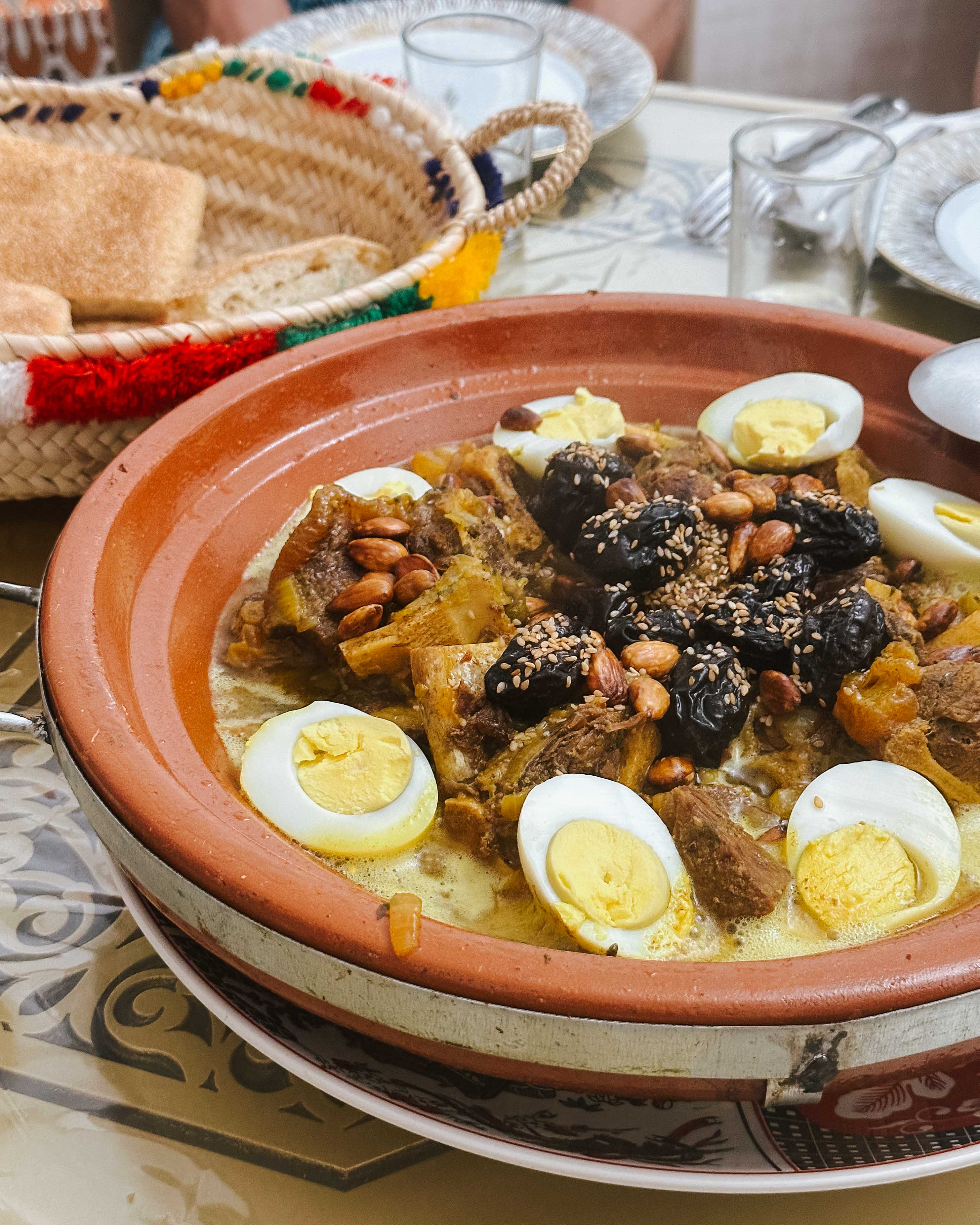
- Local tagine or street meal: $3 to $6 (30 to 60 MAD)
- Main course at a mid-range restaurant: $8 to $15 (80 to 150 MAD)
- Dinner at an upscale restaurant: $25 to $35+ per person
- Petit taxi ride across town: $1 to $3 (insist on the meter, or agree the fare first)
- Train, Marrakech to Casablanca (2nd class): roughly $12 to $18
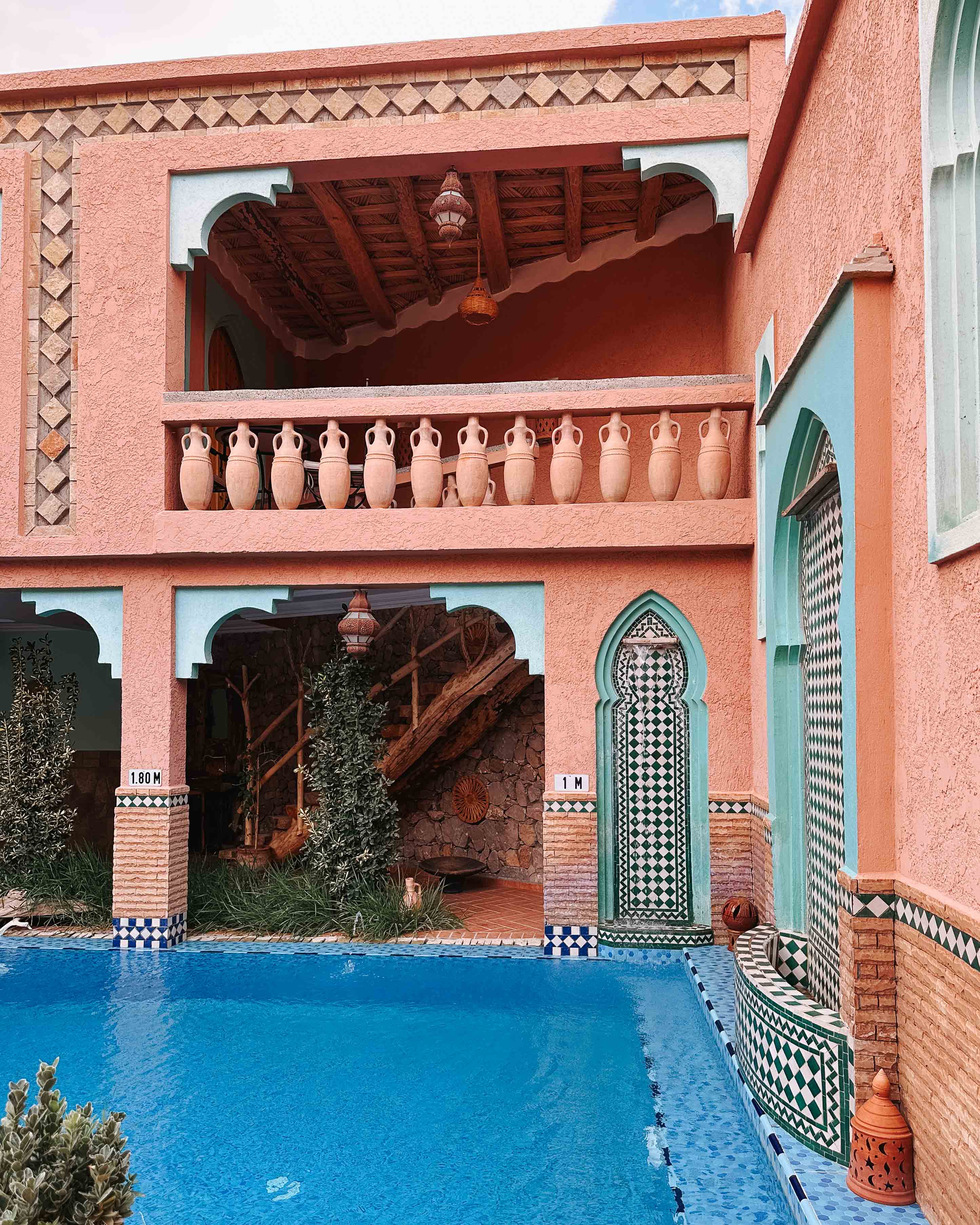
- Night in a mid-range riad: $60 to $130
- 3-day shared Sahara tour from Marrakech: roughly $90 to $150 per person
- Entry to sites like Bahia Palace or the Majorelle Garden: $5 to $8
Money in Morocco: currency, cash, and cards
The currency is the Moroccan dirham (MAD), and it is a closed currency. That means you cannot buy meaningful amounts of it outside the country, and it is illegal to bring in or take out more than 2,000 dirhams. In practice, you arrive with a little backup cash in dollars or euros and withdraw dirham from an ATM once you land.
- ATMs are everywhere in cities and towns and are the easiest way to get dirham. Expect a per-withdrawal fee, so take out larger amounts less often. They thin out in rural areas and the desert, so stock up before you leave a city.
- Cards are accepted at most hotels, riads, larger restaurants, and supermarkets. Smaller places, the souks, taxis, and rural spots are cash only. Carry cash for daily life.
- Euros and dollars are sometimes accepted in very touristy places, but the exchange rate you get is poor. Pay in dirhams whenever you can.
- How much cash to carry: enough for a day or two of food, taxis, tips, and shopping, then top up. You rarely need a big wad of cash on you.
Where Morocco is cheap, and where it adds up
Being honest, because our guests appreciate it: Morocco is cheap for the everyday stuff and can be pricey for the memorable stuff.
Cheap: street food and local restaurants, mint tea, city taxis, public transport, entry to most sights, and simply wandering the medinas, which costs nothing.
Where it adds up: beautiful riads, private drivers and guides, multi-day desert tours, camel treks, hot-air balloon rides, and hammam and spa experiences. None of these are unreasonable, but stack a few and a “cheap” trip becomes a mid-range one fast. This is the part people underestimate.
The souk: prices are not fixed and haggling is expected. Start well below the asking price, stay friendly, and be ready to walk. It is part of the experience, not a fight.
Tipping in Morocco
Tipping is customary but small, and it adds a little to your daily budget. A few dirhams for a café, rounding up the taxi fare, and 10 to 20 MAD for helpful service is normal. We cover exactly who to tip and how much in our full guide to tipping in Morocco.
How to save money in Morocco
You don’t have to travel on the absolute cheapest budget to keep costs under control in Morocco. A few smart choices can make a noticeable difference:
- Eat where locals eat. Some of the best tagines and grilled meats come from simple local restaurants, often for a fraction of what you’ll pay in tourist hotspots.
- Use trains and CTM or Supratours buses between major cities. They’re usually the cheapest way to get around. If you have limited time or want to reach places that are harder to access independently, a private tour can be worth the extra cost, especially when transport, accommodation and planning are bundled together.
- Travel outside the busiest periods. Spring and autumn have great weather, but dates around Easter and other popular holidays can still be expensive. If your dates are flexible, compare accommodation prices before booking.
- Choose your desert experience carefully. Shared tours are cheaper, but private tours give you much more flexibility over the route, stops, accommodation and pace. If Morocco is a once-in-a-lifetime trip, this can be one area where spending a little more makes a big difference.
- Withdraw larger amounts from ATMs less often. This can help reduce repeated withdrawal fees.
- Agree on a taxi fare before getting in, or ask for the meter. This is particularly useful with petit taxis in the cities.
Saving money doesn’t necessarily mean choosing the cheapest option at every step. If you’d rather spend less time coordinating buses, hotels, desert camps and transfers yourself, our private Morocco tours bundle the logistics into one trip while still giving you control over the accommodation level, itinerary and overall budget.
Frequently asked questions
For most US travelers, yes. Everyday costs such as local food, taxis and public transport are relatively affordable, while beautiful riads, private tours and premium experiences can push the overall cost up. How cheap Morocco feels ultimately depends on how you choose to travel.
For everyday spending, $30 goes quite a long way in Morocco. It can cover several local meals, taxi rides, drinks and snacks over the course of a day. It won't stretch to luxury accommodation or a private tour, but for ordinary daily expenses it has good purchasing power.
If your accommodation and major tours are already paid for, around $30 to $50 per person per day is a comfortable starting point for meals, drinks, taxis, tips and small purchases. Bring more if you plan to eat at upscale restaurants, shop in the souks or book extra activities.
You usually only need enough cash for a day or two of food, taxis, tips and small purchases. Around 300 to 500 MAD is a practical amount for everyday spending, with more if you are shopping or heading somewhere with limited access to ATMs. Avoid carrying your entire trip budget in cash.
For most travelers, accommodation, private transport and organized experiences make the biggest difference to the overall budget. Luxury riads, private drivers, multi-day Sahara tours and premium desert camps cost considerably more than everyday expenses such as food, taxis and sightseeing.
As a rough guide, expect around $450–650 per person for a budget trip, $850–1,300 for a mid-range trip, and $2,500 or more for a comfort or luxury trip, excluding international flights. Your route makes a big difference, particularly if you include a private Sahara tour, higher-end riads or a private driver.
The bottom line
Morocco is as affordable or as indulgent as you want it to be. You can travel richly on very little, or spend freely on riads and private guides and still feel you got value. Plan for the everyday to be cheap and the special experiences to be where your budget goes, and you will not be caught out.
And if you travel with us, we will tell you honestly where it is worth spending and where it is not. That is what we are here for.
Want your exact budget? Tell us your dates and how you like to travel, and we will send a no-obligation cost estimate for your trip, with no guesswork. Get a custom quote.
Published: 19 September 2026
About the Author
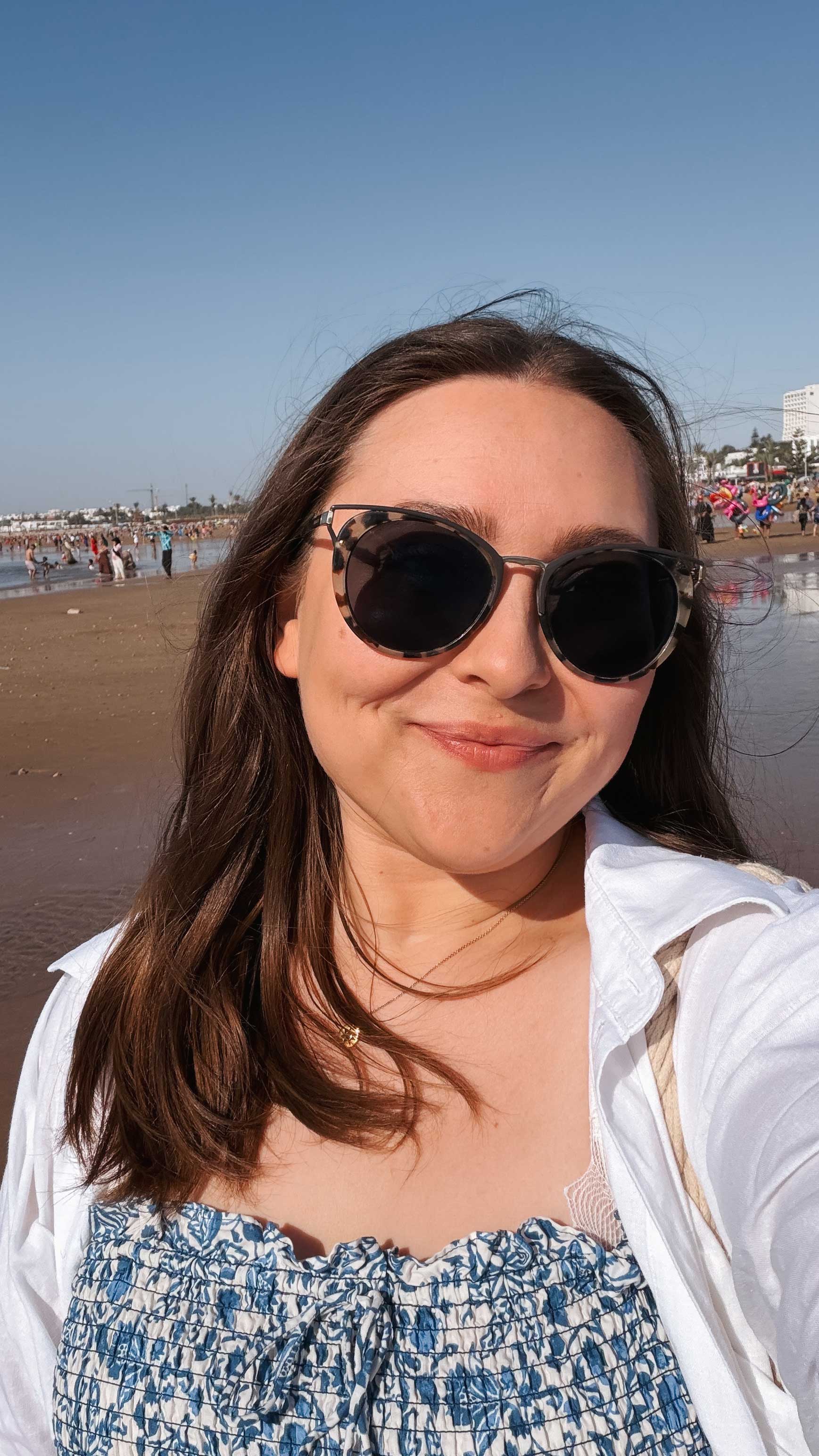
Sandra Potisek is a travel content creator, originally from Slovenia and now spending much of her year in Morocco. As part of the Village Morocco Travel team, she works closely with local guides to plan trips for international guests — and off the clock, she's immersing herself in the country's culture, cuisine, and lesser-known corners firsthand.
Have Any Questions?
We’re here to help with any questions about our tours, travel plans, pricing, or customizing your Morocco journey.