Morocco in Winter: What It's Really Like and Where to Go
Winter is one of our favorite times to travel in Morocco, and one of the most misunderstood. People picture a hot desert country and pack for the beach, or they hear “winter” and assume it’s not worth the trip. The truth sits in between: bright, sunny days that are perfect for exploring, nights that are properly cold, and a country that’s far quieter than in spring.
The short answer: winter in Morocco (December to February) brings mild, mostly sunny days in Marrakech, the warmest weather on the southern Atlantic coast around Agadir, and much colder conditions in the mountains. The Sahara is beautiful by day, but temperatures drop sharply after sunset. Marrakech, the desert and the coast are great winter destinations, while Fes and Chefchaouen are cooler and wetter. Pack layers, a warm jacket and comfortable closed shoes.
The one thing that catches people out is the desert at night. Winter days in the Sahara are lovely and warm, but after sunset the temperature can drop to freezing, 32°F (0°C) or even lower, and you really feel that drop. The first time I slept in the desert, the temperature fell to zero and my whole body was shaking from the cold. It wasn’t only the cold, it was the huge difference from the warm afternoon. It’s still a wonderful time to explore the desert. Just don’t expect it to be scorching hot, because it might surprise you.
Is winter a good time to visit Morocco?
Yes, as long as you know what you’re signing up for. Here’s the honest trade-off.
What’s great about winter:
- Clear, sunny days. Marrakech and the south get plenty of sunshine, and the light is beautiful for photos.
- Ideal sightseeing weather. Walking the medina in Marrakech is far more comfortable at 65°F (18°C) than at 100°F (38°C) in summer, and sunny winter days are good for gentle walks in the Atlas foothills, as long as you dress for the cold higher up.
- The desert at its best by day. Camel rides and dune walks in comfortable temperatures, with crisp, starry nights.
- Fewer crowds and lower prices, outside the Christmas and New Year rush.
- Snow-capped mountains. The High Atlas behind Marrakech is at its most dramatic.
What’s harder:
- Cold nights, especially in the Sahara and the mountains.
- Short days. The sun sets around 5:30 pm in December, so long driving days start early.
- Rain in the north. Fes, Chefchaouen and Tangier get most of their rain in winter.
- Chilly buildings. Many riads and guesthouses aren’t built for the cold (more on that below).


Winter weather in Morocco by region
Morocco’s weather changes a lot depending on where you are. The coast stays mild, the desert swings between warm days and cold nights, and the mountains get snow. These are approximate long-term averages for January, the coldest month, so expect some variation from year to year. December is similar, and February is a little warmer.
Region | Daytime high | Night low | Rain
|
|---|---|---|---|
Marrakech | 64–68°F (18–20°C) | 41–45°F (5–7°C) | Occasional |
Fes | 59–63°F (15–17°C) | 39–43°F (4–6°C) | Fairly frequent |
Chefchaouen | 55–59°F (13–15°C) | 39–43°F (4–6°C) | Frequent rain |
Sahara (Merzouga) | 61–68°F (16–20°C) | 32–41°F (0–5°C) | Rare |
Ouarzazate and the Draa Valley | 59–64°F (15–18°C) | 32–37°F (0–3°C) | Rare |
High Atlas villages (Imlil) | 46–54°F (8–12°C) | 25–32°F (-4–0°C) | Snow possible |
Agadir and Taghazout | 68–72°F (20–22°C) | 45–50°F (7–10°C) | Occasional |
Essaouira | 63–66°F (17–19°C) | 48–52°F (9–11°C) | Occasional |
December is mild and bright, with the busiest stretch of the season around Christmas and New Year’s. January is the coldest month and the quietest, outside the first week. February starts warming up, the almond trees blossom in the south, and in 2027 Ramadan begins early in the month, around February 8. For a month-by-month view of the whole year, see our guide to the best time to visit Morocco.
How cold it really feels
The temperatures above don’t tell the whole story. What surprises most winter visitors isn’t the weather outside, it’s the cold indoors.
- Riads are built for summer. Traditional riads are designed around an open courtyard to stay cool, with tiled floors and thick walls. That’s perfect in July and chilly in January. Most riads have air-conditioning units that also heat, and better ones add fireplaces, extra blankets or underfloor heating, but budget riads can feel cold at night. When booking, ask whether the room has heating.
- The temperature drops fast after sunset. A sunny 66°F (19°C) afternoon in Marrakech can turn into a 43°F (6°C) evening. Dinner on a rooftop terrace needs a warm jacket.
- Days are short. In late December the sun rises around 7:30 am and sets around 5:30 pm in Marrakech, and a bit earlier in Fes and the desert. On driving days, that means an early start so you arrive before dark. By mid-February you gain about 45 minutes of evening light.
- Hammams are the local answer. A traditional steam bath and scrub is the best way to warm up after a cold day, and winter is the perfect time to try one.
Best places to visit in Morocco in winter
Marrakech
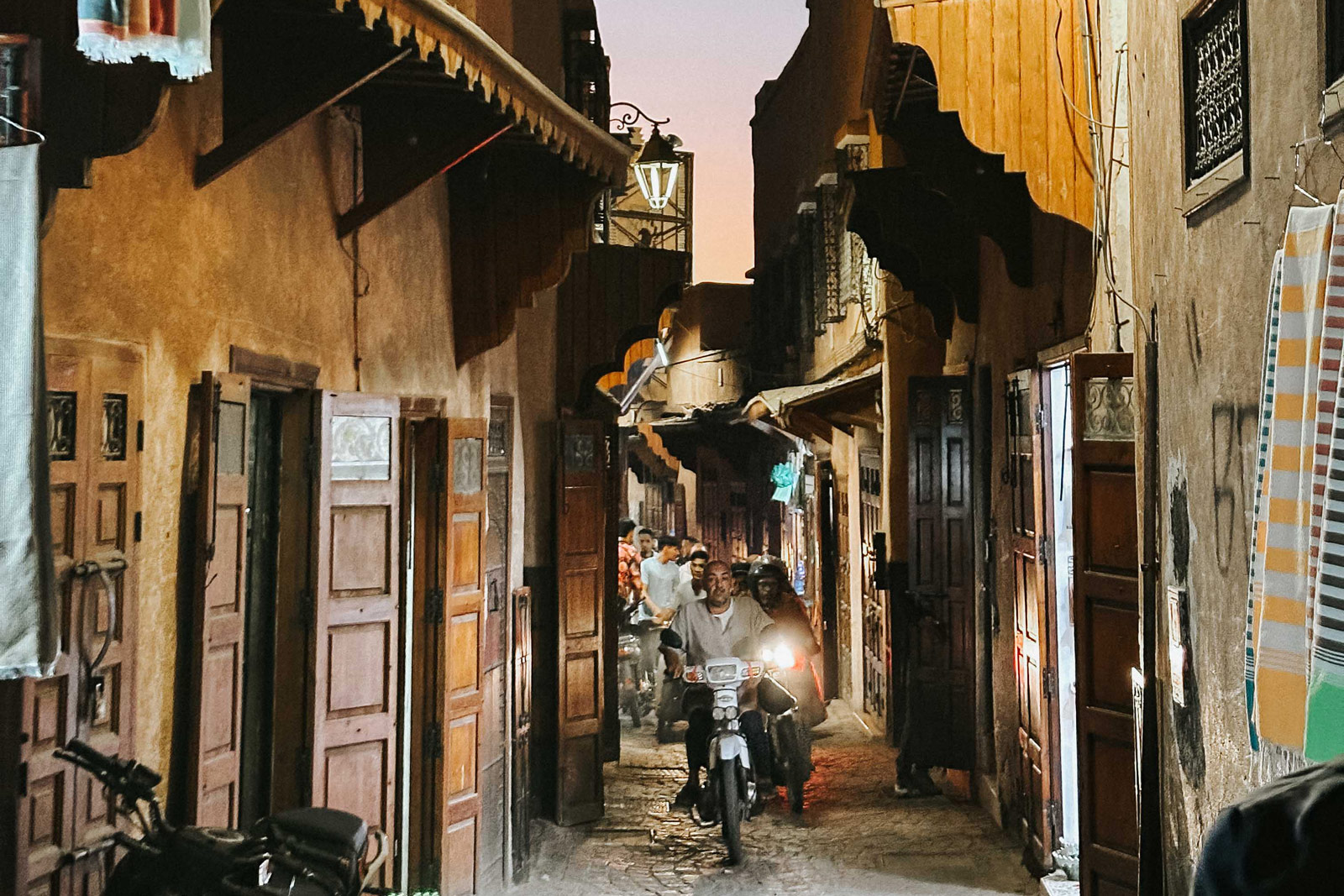
Marrakech is the easiest winter base: mild, sunny days, a lively medina and plenty to do. The souks, palaces and gardens are much more pleasant to explore without summer heat, and the snowy Atlas peaks on the horizon are a winter-only view. The warmest part of the day is from late morning to mid-afternoon, so plan a long lunch on a sunny rooftop terrace and save the indoor sights, like the palaces and museums, for the late afternoon.
The Sahara (Merzouga and Erg Chebbi)
Winter is one of the best seasons for the desert, with one big condition: the nights. More on that in the next section.
Agadir and Taghazout
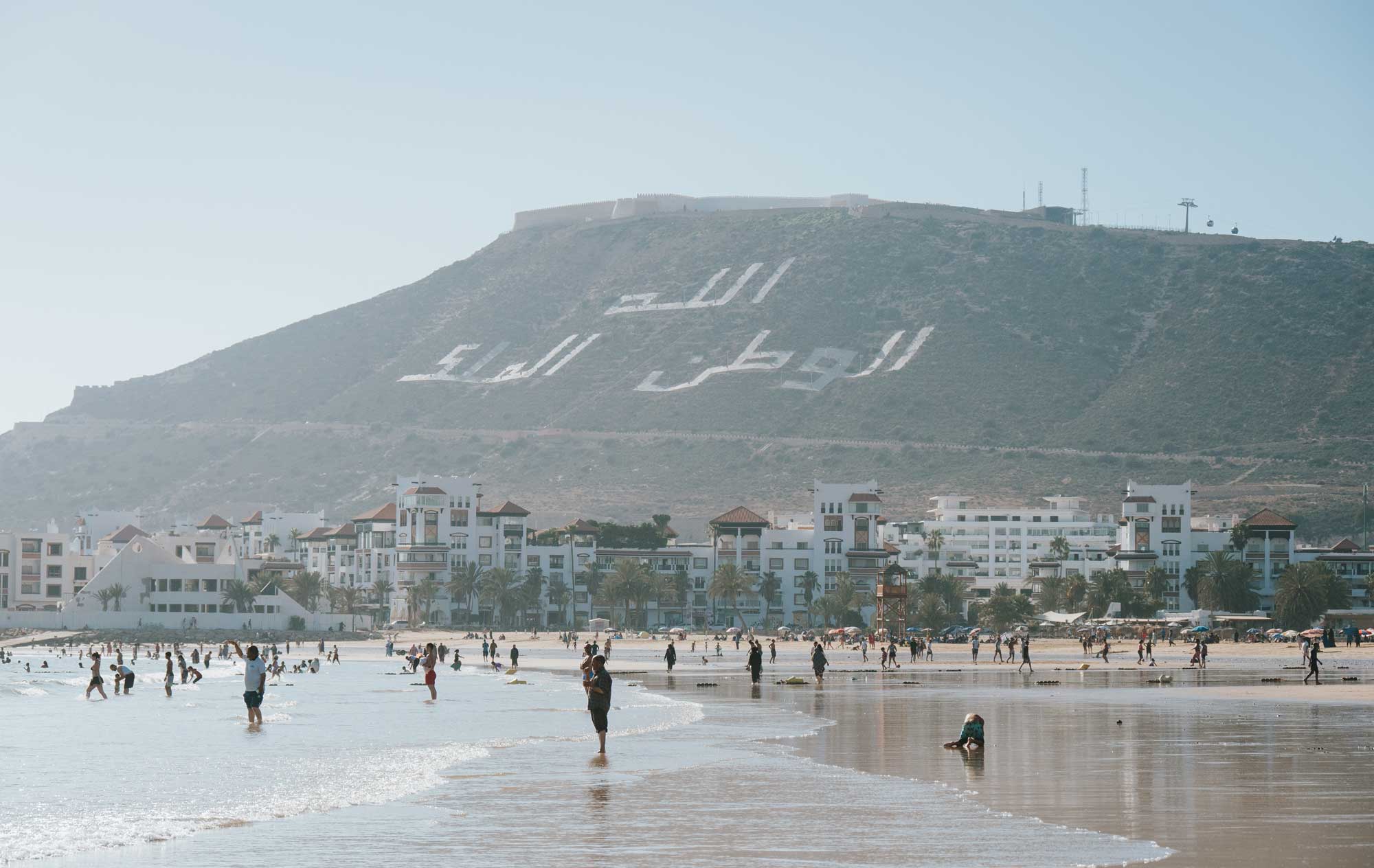
If you’re after winter sun, this is the warmest part of Morocco. Agadir has a long sandy beach and daytime temperatures around 70°F (21°C) even in January. Just north, the village of Taghazout is in its peak surf season, with the most consistent waves of the year from fall to spring. Both are easy to reach from Marrakech by road.
Essaouira
The laid-back port town on the Atlantic is mild in winter, and less windy than in summer, when the trade winds blow hardest. It’s a lovely place to slow down for a couple of nights at the end of a trip, with seafood at the harbor and a whitewashed medina that’s easy to explore on foot. Our Essaouira day trip from Marrakech is an option if you’re short on time.
Ouarzazate, Aït Ben Haddou and the Draa Valley
The kasbahs and palm groves of the south look their best in clear winter light. Days are pleasant, nights are cold, and you’ll mostly pass through on the way to or from the desert.
Tafraoute and the Anti-Atlas
In late January and February, the almond trees around Tafraoute bloom white and pink against red granite hills, and the town usually holds an almond blossom festival in February. It’s off the classic route but a beautiful detour if you’re heading to the coast.
Fes
Fes is worth visiting at any time of year, but in winter it’s cooler and wetter than Marrakech. Bring a waterproof jacket and shoes with good grip, as the medina’s stone alleys get slippery in the rain.
Chefchaouen
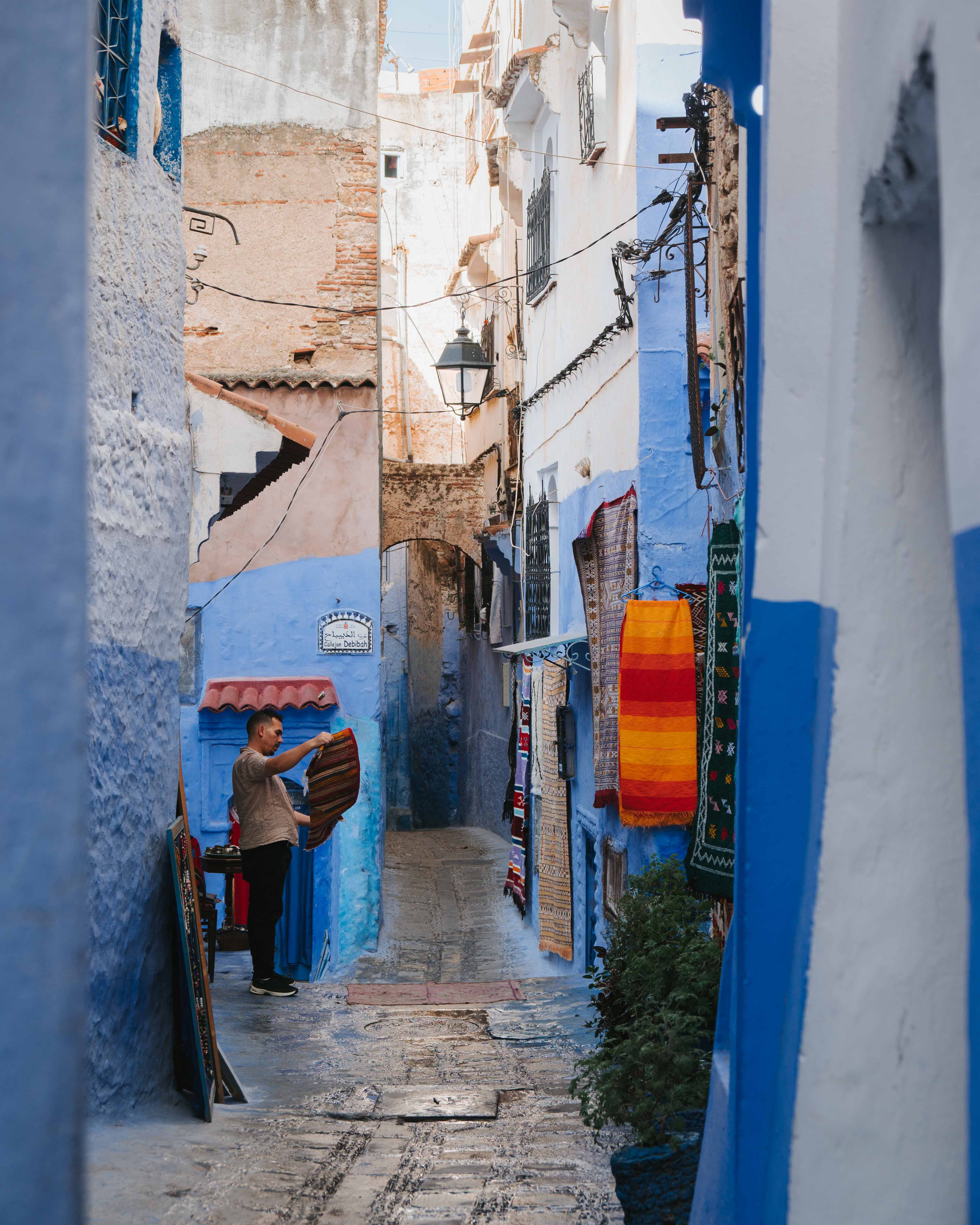
The Blue City is one of the less predictable winter destinations. It’s in one of the wettest parts of the country, and December and January bring many gray, cold days, although a clear winter day there can be beautiful. If it’s high on your list, you can still go, but spring or fall is a safer bet if you can choose.
The Sahara in winter
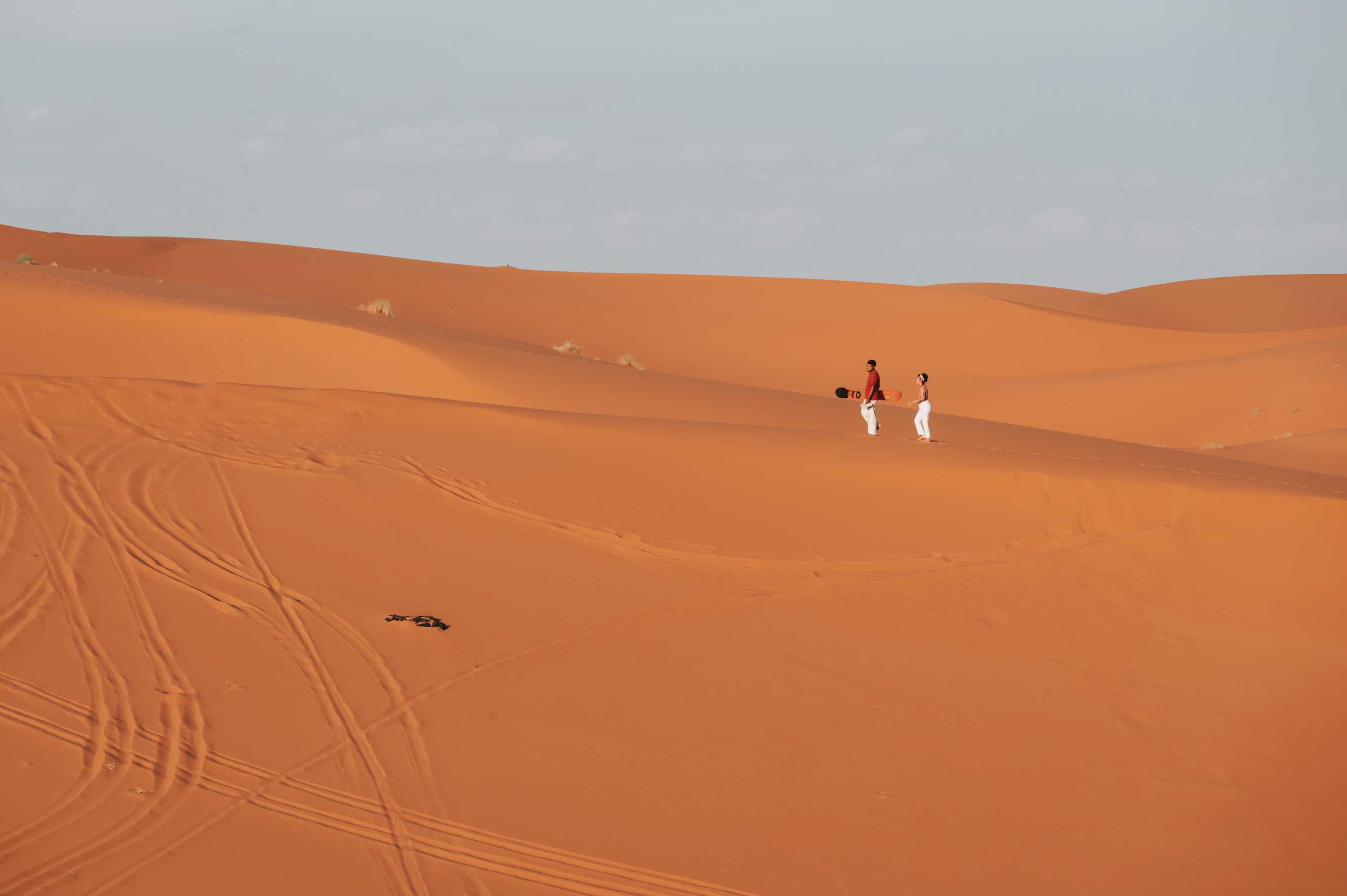
Winter days in the Sahara are some of the best of the year: sunny, clear and comfortable for a camel ride into the dunes. The sunsets and sunrises are spectacular, and the night sky is incredibly clear.
The catch, as I found out on my first night, is the cold: in December and January, nights in Merzouga often fall to 32 to 41°F (0 to 5°C), sometimes lower.
- Blankets and heating. Most desert camps provide very thick blankets, but not every tent has heating, even in luxury camps. If you’re going in December or January and tend to get cold, ask about heating before you book. We can help you choose a camp that suits winter.
- Pack for the night. Bring a puffer jacket, a beanie, gloves and thick socks to sleep in, especially if you tend to get cold.
- Dress for the camel ride. Sunset rides start warm and end cold, so keep your jacket with you.
Three days is possible for a desert trip from Marrakech to Merzouga, but four days gives you a more relaxed journey, with time for the valleys, kasbahs and villages along the way, which matters more when the days are short. Our guide on how far the Sahara is from Marrakech covers the route and timings.
Planning a Sahara trip this winter? We run private desert tours from Marrakech with your own driver-guide, and we’ll plan the driving around the short winter days and help you choose a camp that’s warm enough for the season.
Snow in Morocco: skiing, villages and mountain passes
Yes, it snows in Morocco. The High Atlas and the Middle Atlas get snow most winters, and you can be in the snow and the desert on the same trip.
- Oukaïmeden: one of the highest ski areas in Africa, about an hour and a half from Marrakech. Facilities are basic and the snow varies a lot from year to year, but skiing in Morocco is a story to take home. When the lifts are running, you can usually rent equipment at the base.
- Imlil and the Toubkal area: traditional Berber villages under snowy peaks, about 90 minutes from Marrakech. Lower-level walks are possible in winter, while Mount Toubkal itself needs winter mountaineering gear and an experienced mountain guide.
- Ifrane: a Middle Atlas town with Alpine-style houses, often called “the Switzerland of Morocco.” It sees regular snow and is an easy stop between Fes and the desert.
- The Tizi n’Tichka pass: the main road from Marrakech to Ouarzazate and the desert climbs to about 7,400 feet (2,260 meters). After heavy snowfall it can close for a few hours, or occasionally longer. With a private driver-guide, you’re not stuck with a fixed timetable: your driver checks the road conditions, and where possible we adjust the plan around them.
Holidays and festivals in winter
- Marrakech International Film Festival: usually held in late November or early December, with screenings and red-carpet events in the city.
- Christmas: Christmas isn’t a public holiday in Morocco, and daily life carries on as normal. You’ll find Christmas dinners at many hotels and riads in Marrakech, but no big Christmas markets or decorations in the medina.
- New Year’s Eve: the busiest night of the season. Hotels and restaurants in Marrakech host gala dinners, and many desert camps hold a New Year’s party under the stars. Book both well ahead, as the best places sell out early.
- Amazigh New Year (Yennayer): celebrated around January 13 to 14, and an official public holiday on January 14 since 2024. In Berber villages and towns, families mark it with a special meal.
- Almond blossom season: late January to February in the Anti-Atlas, with the Tafraoute festival usually in February.
- Ramadan 2027: expected to start around February 8 and end around March 9, 2027, with Eid al-Fitr right after (the exact dates depend on the sighting of the moon). Travel goes on as normal, but many local cafés and restaurants close during the day, the pace slows down, and the streets come alive after sunset when families break the fast. Tourist restaurants and hotels stay open. It’s a fascinating time to visit if you plan around it.
Crowds and prices in winter
Winter has two very different sides:
- Peak season: from around December 20 to the first days of January, Marrakech and the desert camps are as busy as at any time of year, and hotel rates rise accordingly. If you’re traveling over Christmas or New Year’s, book your riad and desert camp as early as possible.
- Low season: from about the second week of January to early February, Morocco is at its quietest. This is the best window for lower hotel rates, empty viewpoints and an unhurried medina.
- February school holidays: French and other European school breaks bring more families to Marrakech in parts of February.
For an idea of what a trip costs overall, see is Morocco expensive?
A winter route we'd recommend
The best winter trips head south toward the sun and leave the rainy north for another season.
Option 1, with the Sahara (our recommendation for winter), about 9 days:
- Days 1 and 2: Marrakech. Explore the medina, the souks and the gardens, and warm up in a hammam.
- Days 3 to 6: the desert. Our 4-Day Desert Tour from Marrakech to Merzouga crosses the Atlas, stops at Aït Ben Haddou and the Dades and Todra gorges, spends a night in the dunes of Erg Chebbi, and returns through Zagora.
- Days 7 and 8: the coast. Head to Essaouira or Taghazout for mild days by the ocean, fresh seafood and a slower pace.
- Day 9: departure. Drive back to Marrakech for your flight (about 3 hours from Essaouira), or fly out of Essaouira or Agadir if the flights suit you.
Option 2, without the Sahara, about 6 days: Marrakech, a day trip into the snowy Atlas Mountains, then a few days on the coast in Essaouira or Agadir.
Every tour we run is private, so we can adjust either route to your dates. Tell us when you’re traveling, and we’ll build a custom winter itinerary around the weather.
What to wear and pack for Morocco in winter
Think layers. You’ll be in a T-shirt at lunchtime and a warm jacket after dark.
- A warm jacket: a puffer or other insulated jacket is ideal for the desert and evenings.
- Layers: long-sleeved tops, a fleece or sweater, and thermal layers if you’re going to the desert or the mountains.
- A beanie, scarf and gloves for the desert night and the Atlas, plus thick socks if you get cold at night.
- Closed, comfortable shoes with good grip, plus waterproof ones if you’re heading north.
- Sunglasses and sunscreen: the winter sun is still strong, especially in the desert and at altitude.
- A swimsuit, for a heated riad pool or the coast. Some hammams also ask you to wear one, while others provide disposable underwear.
For dress codes and what to wear in each city, see our guide on what to wear in Morocco.
FAQ
Can you swim in Morocco in winter?
Only if you don’t mind cold water. The Atlantic is around 63 to 64°F (17 to 18°C) in January, which is fine for a quick dip on a sunny day in Agadir, and surfers wear a wetsuit. For a proper swim, look for a riad or hotel with a heated pool.
Does it snow in Marrakech?
Almost never in the city itself. Snow in Marrakech is extremely rare, and winter days there are usually sunny and mild. What you will see, on clear days, is snow on the High Atlas peaks from the city. If you’d like to get closer, our Ourika Valley and Atlas Mountains day trip takes you into the foothills.
Can I fly directly to Agadir for winter sun?
Agadir has its own international airport with direct flights from many European cities, especially in winter. From the US, you’ll usually connect in Europe or through Casablanca. Many travelers fly into Marrakech instead, spend a few days there, and continue to the coast by road.
When should you avoid Marrakech?
For most travelers, July and August are the hardest months in Marrakech, with daytime highs that often pass 100°F (38°C) and little relief until evening. If you’re traveling in summer, the coast and the mountains are more comfortable.
Published: 1 November 2026
About the Author
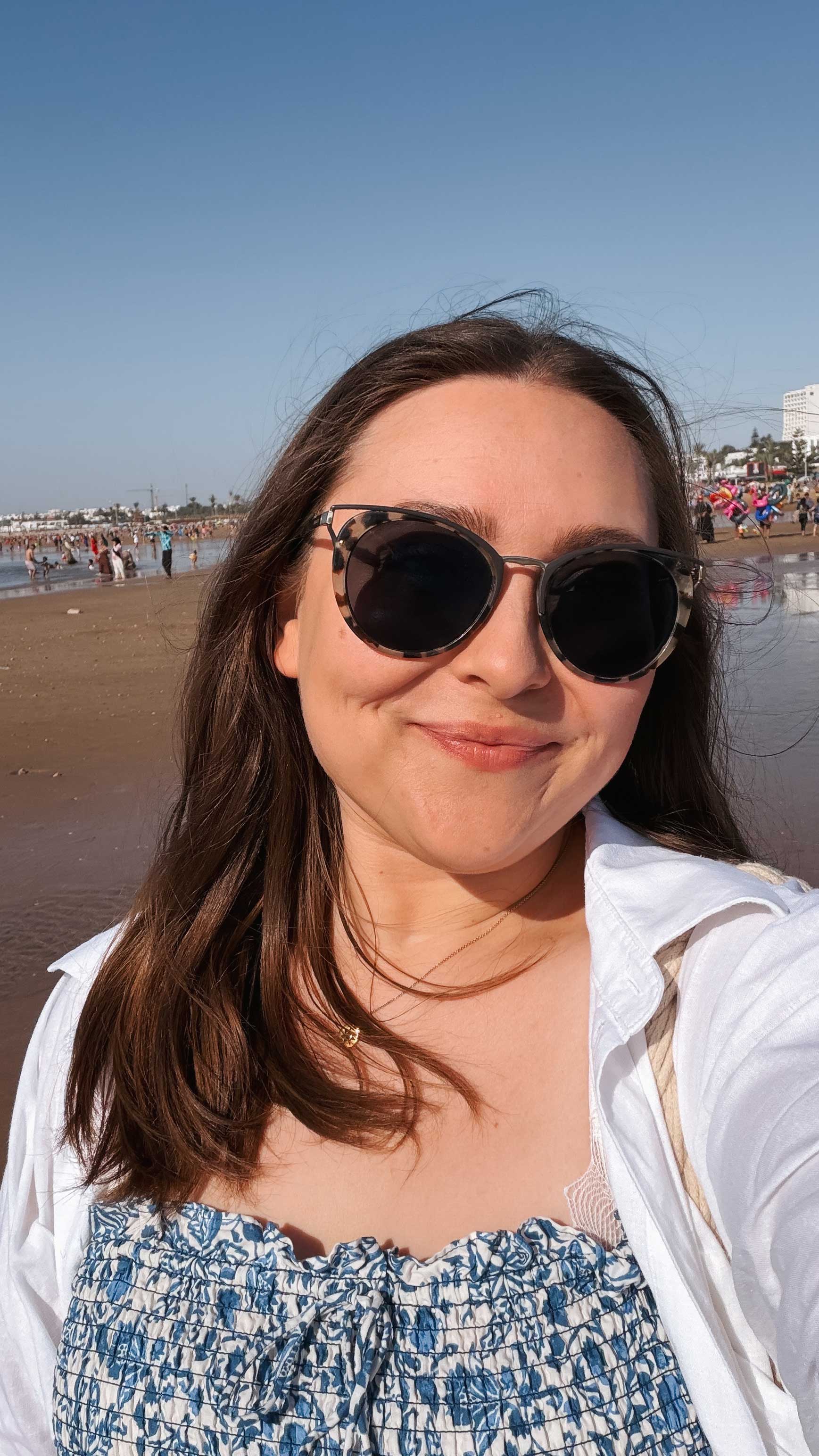
Sandra Potisek is a travel content creator, originally from Slovenia and now spending much of her year in Morocco. As part of the Village Morocco Travel team, she works closely with local guides to plan trips for international guests — and off the clock, she's immersing herself in the country's culture, cuisine, and lesser-known corners firsthand.
Have Any Questions?
We’re here to help with any questions about our tours, travel plans, pricing, or customizing your Morocco journey.