What to Wear in Morocco: A Complete Guide for Women and Men (Plus a Packing List)
I have dressed for Morocco in the heat of a Marrakech summer and in near-freezing Sahara nights, and I put this guide together with our local guides at Village Morocco Travel, the people who spend every week on these roads, in these medinas, and out in the dunes. Between my own wardrobe mistakes and the guests our team has quietly rescued with a spare scarf, let me tell you what actually works here.
This is the guide we wish every guest had before their first trip. It covers exactly what to wear as a woman and as a man, how the dress code really works, what changes by season and region, and a full packing list at the end so nothing gets left behind.
What to wear in Morocco: the short answer
Wear loose, lightweight clothing that covers your shoulders and knees. Morocco is a majority-Muslim country where modest dress is the everyday norm, so women are most comfortable in maxi dresses, flowy trousers, and long tunics, while men do best in t-shirts with lightweight trousers or longer shorts. You do not need to cover your hair. Natural fabrics like cotton and linen beat synthetics in the heat, layers matter because desert and mountain nights get cold, and a large scarf is the single most useful thing you can pack.
That is the whole idea. The rest of this guide is the detail that makes your trip easier, cooler, and more respectful.
The Morocco dress code, explained
Let me speak plainly, traveller to traveller, because this is the question I get most.
You will not be turned away for showing your knees, and no one will force you into anything. But loose and modest genuinely serves you well: more smiles, and far less unwanted attention when you cover up a little. Think of it as reading the room in someone else’s home.
From our local guides: the further you get from tourist hubs like Marrakech and the coast, the more conservative the villages become. In the big cities you will see locals in everything from jeans to full traditional dress. In a small mountain village, very short or tight clothing draws every eye in the square. Our team dresses more modestly the moment we leave the city, and you will feel more comfortable if you do too.
What to wear in Morocco as a woman
This is where most of you are starting, so here is the honest version.
You do not need to cover your hair, and you do not need to hide in layers of fabric. Morocco is a very touristy country, and in the cities, resorts, and along the coast you will see plenty of women, locals and visitors alike, in shorts and sleeveless tops. It is genuinely fine, and nobody will stop you.
The reason we still suggest covering your shoulders and knees is not a rule, it is about being respectful and blending in. Cover up a little and you get fewer stares, warmer welcomes, and you simply feel more at ease, especially away from the tourist hubs. So wear the sleeveless top or the shorts on a hot day in Marrakech if you want to. Just keep a scarf or a light layer in your bag to throw on when you leave the busy areas or head somewhere more traditional and rural.
Where you can, keep things loose. Flowy is your friend: it is modest and it keeps you cool.
Tops
- Loose t-shirts and short-sleeve tops that cover the shoulder
- One or two long-sleeve blouses or tunics (sun protection and modesty in one)
- A light cardigan or overshirt for layering
Bottoms and dresses
- Loose trousers, linen pants, or wide-legged trousers
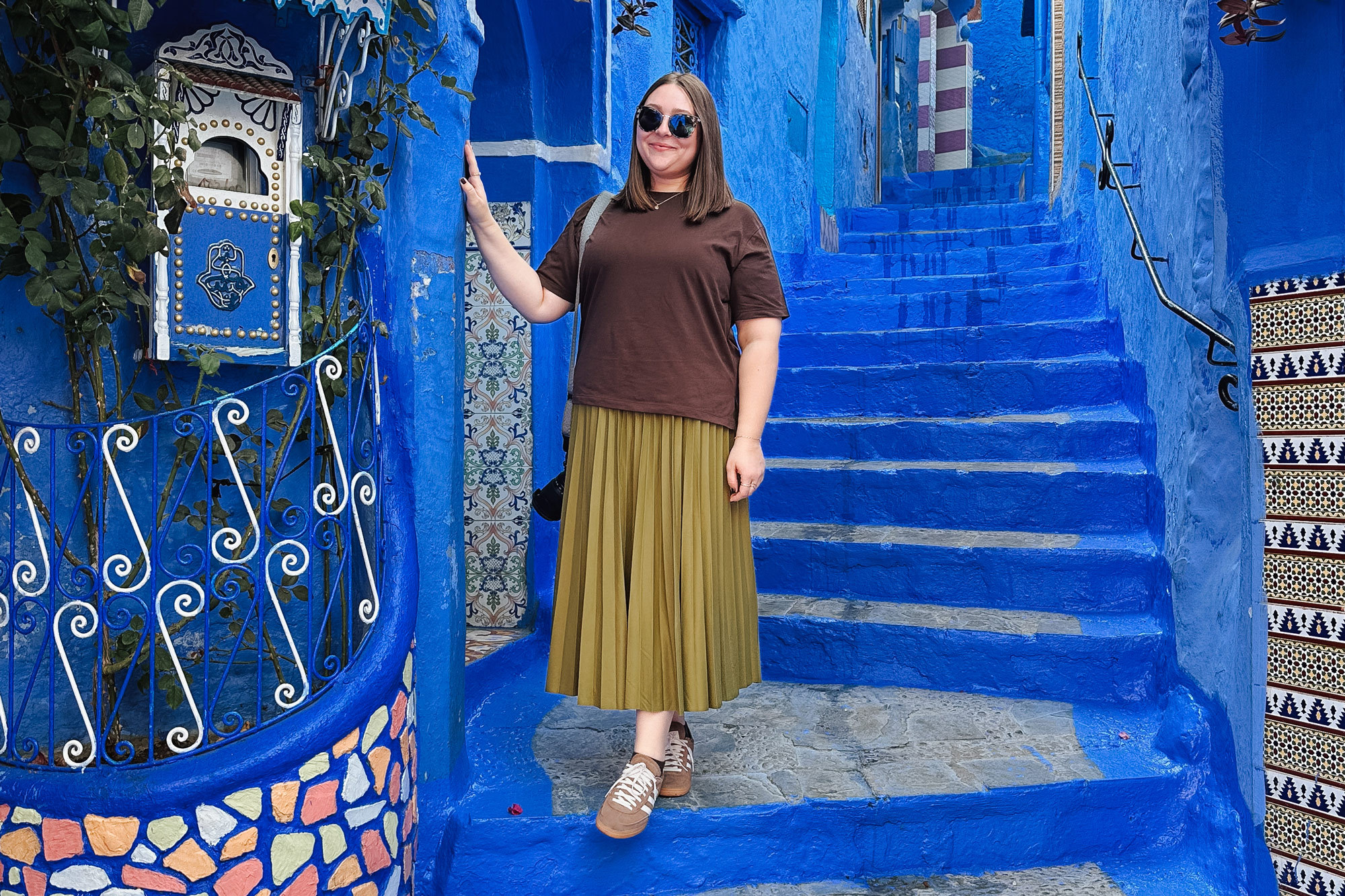
- Maxi skirts and maxi dresses, which are ideal here: modest, cool, and beautiful against the blue and terracotta walls
- Long tunics worn over leggings
Can I wear leggings in Morocco? Yes, but pair them with a long top or tunic that covers your hips and bottom. Leggings on their own read as underwear to a lot of older locals, especially outside the big cities.
Can I wear jeans in Morocco? Yes. Jeans are common and completely fine, in cities and villages alike. They are just hot at midday, so many travellers prefer loose cotton or linen for the middle of the day and save jeans for cooler evenings.
The one thing I always pack: a large light scarf, and our guides will tell you the same. It covers your shoulders when you stop at a mosque or holy site, keeps the sun off your neck in the desert, doubles as a blanket on chilly transfer drives, and shields your face when the wind picks up sand. Pack one, because you will want to buy three more here anyway.
What to wear in Morocco as a man
Simpler, but not a free pass. Skip the tank tops and very short shorts in medinas and rural areas, where they read as underwear or beachwear.
- Lightweight trousers, chinos, or linen pants for most days
- T-shirts and short-sleeve shirts that cover the shoulder
- Longer shorts (around knee length) are fine in cities and by the coast
- A light layer or overshirt for cool evenings
- A warm layer for desert nights and the mountains
In short: a t-shirt with lightweight trousers or longer shorts will carry you through almost the entire trip.
What to wear in Morocco by season
Morocco is a year-round destination, but what you wear shifts a lot with the calendar.
What to wear in Morocco in spring (March to May): My favourite season. Warm days, cool evenings, occasional spring rain, everything green and in bloom. Wear light layers, bring a light rain jacket, and keep a warm layer for the evenings.
What to wear in Morocco in summer (June to August): Hot, and inland (Marrakech, Fes, the desert) it is extra hot. Go for your loosest, lightest clothing and serious sun protection. You still want a warm layer if you are heading up into the Atlas or out to the dunes, where nights cool off. The coast (Essaouira, Taghazout) stays breezy and lovely.
What to wear in Morocco in autumn (September to November): Another sweet spot. Warm days easing into cooler nights as the season turns. Light layers again, and start adding a warmer jacket toward November. October in particular stays lovely and warm in the day with a genuine chill after dark.
What to wear in Morocco in winter (December to February): Sunny days, genuinely cold nights, and snow in the High Atlas. This surprises people every year. You will want a proper warm coat, hat, gloves, and warm layers, especially for the desert and mountains. Riads without heating get chilly, so pack cosy socks and warm sleepwear.
What to wear in Morocco by region
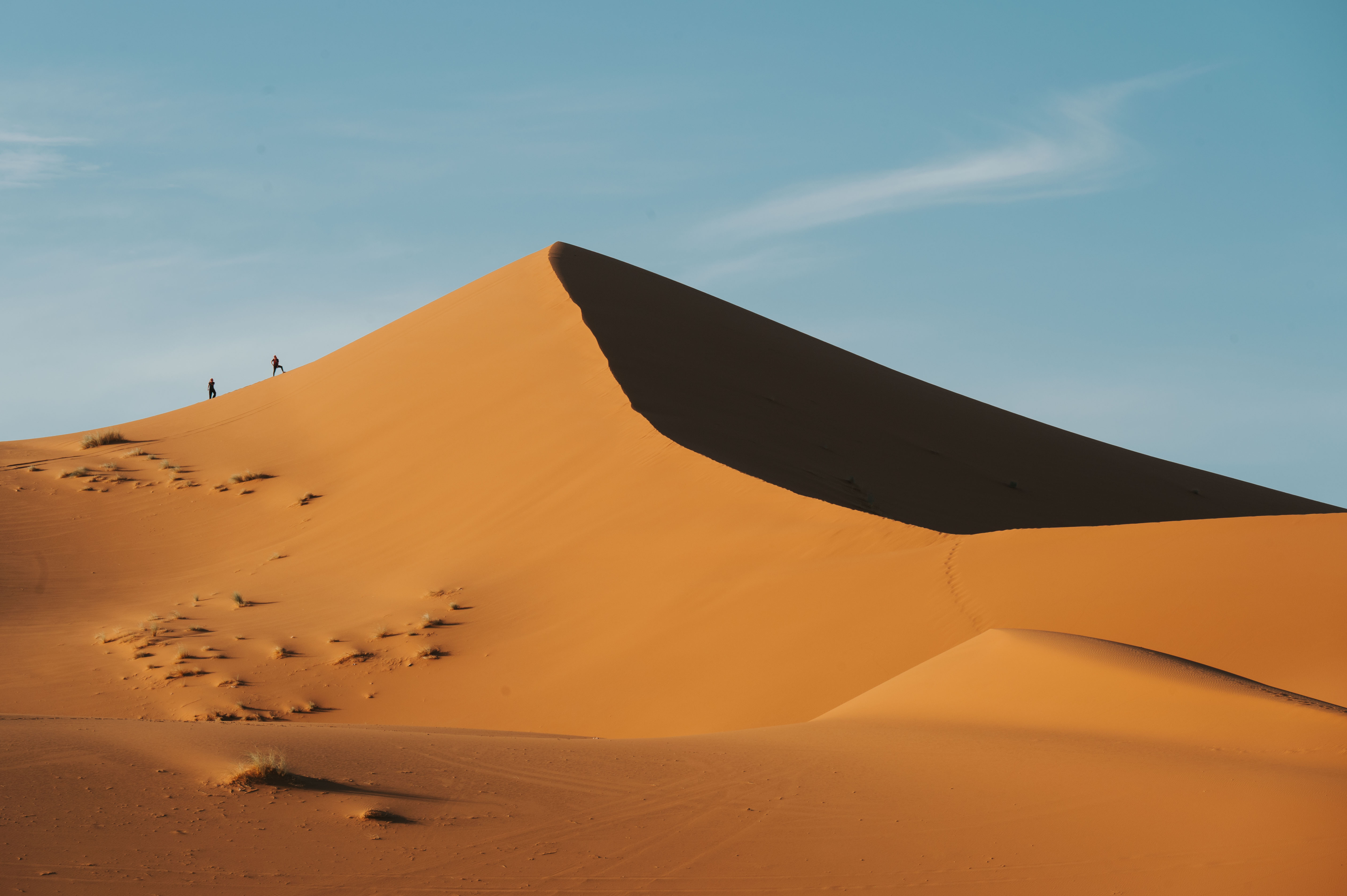
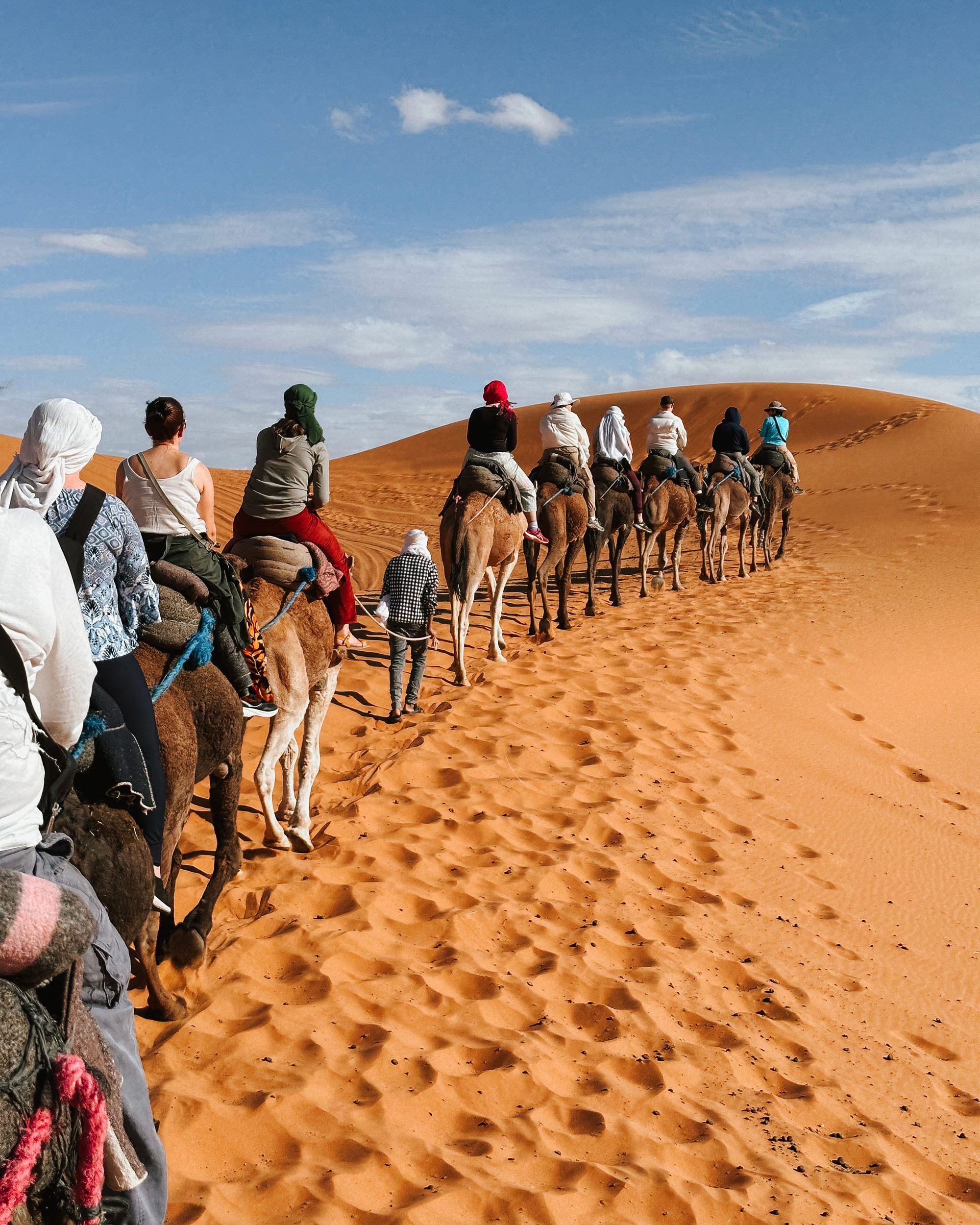
The Sahara and desert camps: Days are hot, nights can drop close to freezing even in warmer months. Bring a warm layer, a hat, and warm socks for the night, plus a scarf for the wind and sand. Closed shoes for the camel walk, sandals for around camp.
The Atlas Mountains: Cooler than the plains, and cold at altitude. Proper walking or hiking shoes, warm layers, a windproof jacket, and sun protection, because the mountain sun is fierce even when the air is cool.
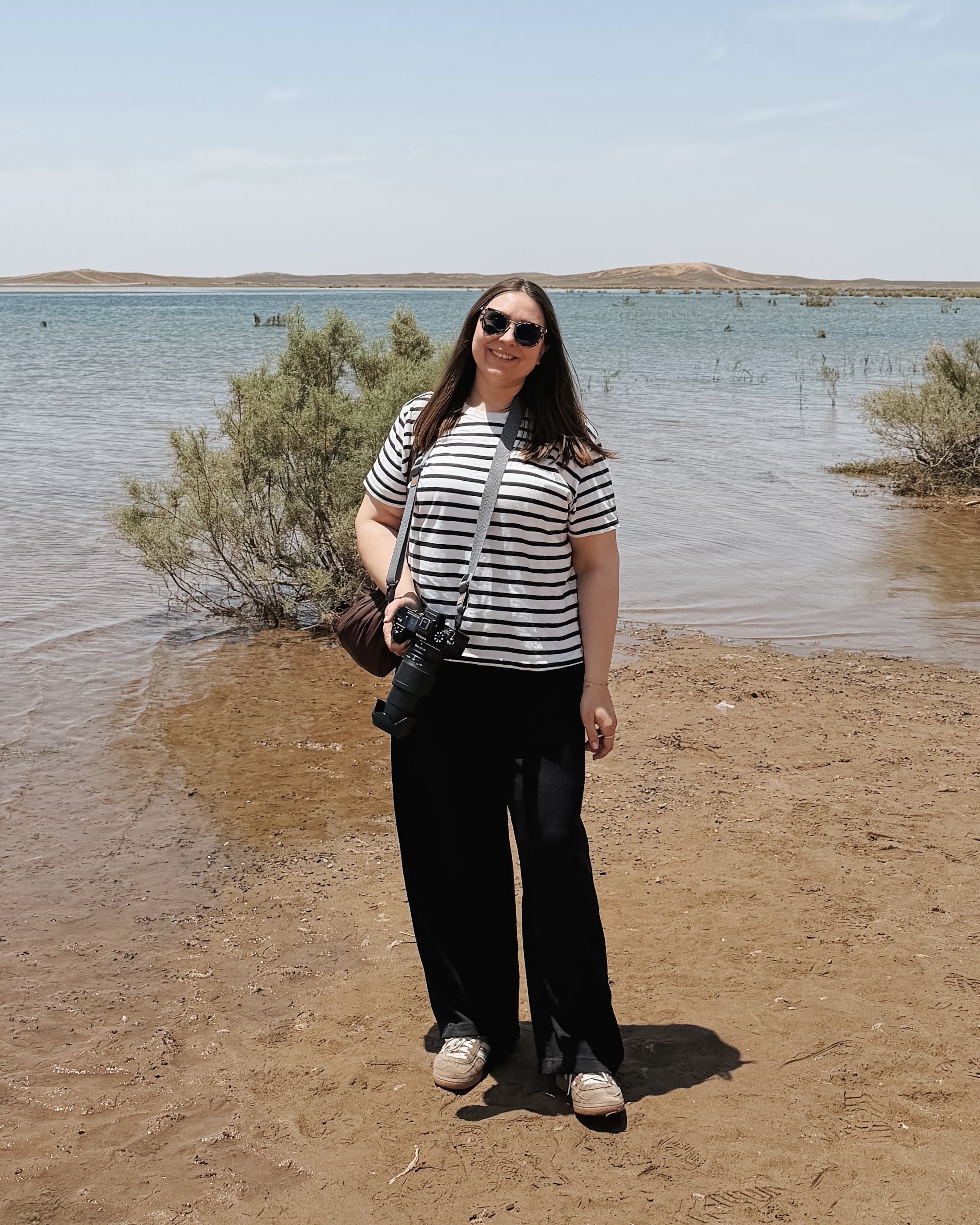
Cities and medinas (Marrakech, Fes, Chefchaouen, Tangier): Comfortable walking shoes are everything. Modest, breathable clothing, a crossbody bag that zips, and your scarf for sudden sun.
The coast (Essaouira, Taghazout): Breezier and milder than inland. Bring a windbreaker, it is called the Windy City for a reason, plus your swimwear and a warm layer for the evening.
What to wear for desert and activity days
This is where guests underpack and regret it, so here is exactly what our team wears for the big Sahara moments.
On a camel trek: Closed, comfortable shoes rather than sandals, because the stirrups and the sand are not kind to bare feet, and loose trousers so nothing rides up on the saddle. Tie a scarf over your head and across your face for the wind and sand, and wear sunglasses. Long sleeves save you from the midday sun out there, where there is no shade at all.
For a Sahara sunrise or sunset: The temperature swing is dramatic. At sunrise it is genuinely cold, so wear a warm layer, a hat, and warm socks, then peel off as the sun climbs. For sunset, start warm because the cold arrives the moment the light goes.
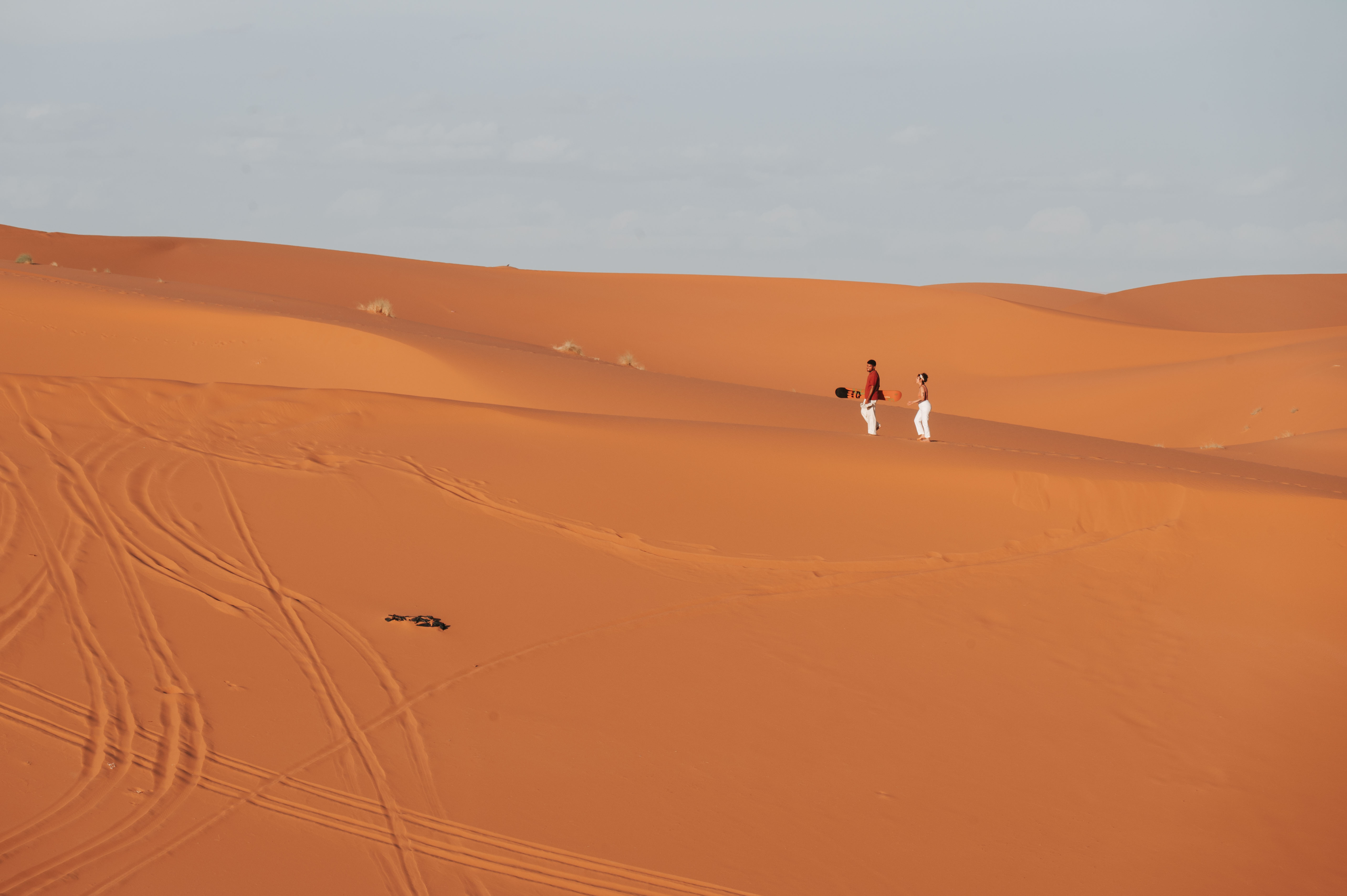
Sandboarding and dune walking: Closed shoes you do not mind emptying of sand, plus sunglasses and a scarf, because you will be moving and the sand gets everywhere. Trousers you can brush off easily beat anything delicate.
Evenings at a desert camp: Camps can run on limited power and the nights get cold fast. Bring a warm layer, warm socks, and something cosy to sleep in, plus a headlamp or torch for getting around after dark.
What shoes to wear in Morocco
One pair of comfortable, broken-in walking shoes or trainers. Medina streets are uneven, ancient, and endless. This is not the trip for stiff new shoes.
- Sandals that slip on and off easily. You will remove your shoes constantly: entering riads, some shops, and any home you are invited into.
- Hiking shoes only if you are trekking the Atlas or doing serious desert walking.
Leave the heels at home. The cobbles will eat them, and nobody dresses up in the medina.
The full Morocco packing list
Everything above is what to wear. Here is the complete list of what to pack, refined over hundreds of guest trips.
Clothing
- Loose tops with covered shoulders
- One or two long-sleeve shirts or blouses
- Loose trousers or linen pants
- Maxi dresses or skirts
- A light cardigan or overshirt
- A warm layer that packs down small (fleece or light puffer) for desert nights and the mountains
- A light rain jacket if you are travelling November to March
- Swimwear (many riads have plunge pools, and the coast is gorgeous). Wear it at your accommodation or the beach, not through town.
- Warm pyjamas and socks for winter and desert camps
- Enough underwear that you are not doing laundry on day three
Footwear
- Comfortable walking shoes
- Easy slip-on sandals
- Hiking shoes (only if trekking)
Accessories and practical extras
- A large scarf or two, the desert-island item
- Sunglasses and a sun hat with a brim
- A daypack for excursions
- A reusable water bottle (to keep water cool for longer)
- A zip crossbody bag for markets
- A small padlock for luggage
Toiletries
- Sunscreen (high SPF, the sun is stronger than it feels), lip balm, and plenty of moisturiser, because the dry desert air does a number on skin and lips
- Your usual shampoo, conditioner, deodorant, and skincare
- Hand sanitiser
On tissues and toilet paper, from painful experience: you can buy toilet paper and tissues everywhere here, so do not overpack them. In our cars we always keep a stash for exactly these emergencies, so travelling with us you are covered on the road. But do tuck a small pack of tissues in your carry-on for the airport itself, because airport bathrooms are very often out of paper.
Electronics and adapters
- Plug adapter: Morocco uses European-style Type C and E plugs, 220V, 50Hz. A universal or European adapter will do.
- Phone, charger, and a power bank for long days and desert nights with no sockets (a lot of camps do have sockets, though)
- Camera, because this is one of the most photogenic countries on earth
- A small zip-lock bag to protect your phone and camera from sand on desert days
Medications and a small health kit
- Any prescription medication, in its original packaging, with enough for the whole trip
- Rehydration salts or electrolyte sachets
- Something for an upset stomach, just in case
- Painkillers, antihistamines, and plasters
Pharmacies are excellent in the cities but thin out fast in rural areas, so carry what you might need. The one time you want Imodium at 11pm in a village in the middle of nowhere, you will be very glad it is in your bag.
Buying clothes and scarves in Morocco
You do not have to arrive with everything. Some of the best additions to your Morocco wardrobe are the ones you pick up here.
- Scarves are everywhere and cheap, in cotton, linen, and silk blends, and the souk is the place to buy the light one you will end up living in.
- Kaftans and loose cotton tunics are made for this climate and this dress code, and a market seller will happily help you find one that fits.
- Babouche slippers are soft, packable, and perfect for around your riad.
- Leather bags and jackets, especially in Fes, if you have room to carry them home.
A tip from our guides: haggling is expected and friendly, so take your time, and buy the scarf on day one so you have it for the whole trip.
What not to wear or bring to Morocco
- Very revealing clothing (short shorts, crop tops, low-cut tops) anywhere outside your riad or the beach. Pack a couple of nicer resort pieces for the pool, just not for the medina.
- Drones, which are heavily restricted. Without prior permission from Morocco’s Directorate General for Civil Aviation you risk fines and having your drone confiscated at customs, so check the official UK FCDO travel advice for Morocco for the current rules before you travel. The simplest option is to leave it at home.
- Too many shoes. Two or three pairs, maximum.
- A hairdryer. Most riads and hotels have them.
- A rigid, over-planned wardrobe. Leave a little space, because you will buy a scarf, a rug, some argan oil, and a pair of babouche slippers whether you planned to or not.
Frequently asked questions
No. Female tourists do not need to cover their hair anywhere in Morocco, including the medinas and villages. Many travellers carry a scarf anyway, because it is useful for keeping the sun off, and shielding your face from desert wind, but it is a practical choice, not a requirement.
Female tourists should wear loose, modest clothing that covers the shoulders, chest, and knees. You do not need to cover your hair. Flowy trousers, maxi dresses, and long tunics keep you cool and comfortable, and a large scarf is the most useful single item you can pack.
Yes. Jeans are common and appropriate for both women and men, in cities and villages. They can be hot in the middle of the day, so many travellers wear loose cotton or linen when it is warmest and save jeans for cooler evenings.
Yes, but pair them with a long top or tunic that covers your bottom. Leggings worn on their own read as too revealing to many locals, especially outside the big cities.
Lightweight trousers or longer shorts with a t-shirt or short-sleeve shirt. Men should avoid tank tops and very short shorts in medinas and rural areas. A warm layer is essential for desert nights and the mountains.
It can be. Desert nights drop sharply even after hot days, the mountains are cold at altitude, and winter nights across the country get genuinely chilly. Always pack a warm layer, whatever the season.
Leave drones at home, as they are restricted and often confiscated. Skip very revealing clothing for anywhere outside your riad or the beach, and do not bother with a hairdryer, as most accommodations provide one.
Most travellers come home with a scarf or two, argan oil, a rug or textile, spices, and leather babouche slippers. Leave a little room in your bag, because something always finds its way in.
One last thing from us
The best thing you can pack for Morocco is a little flexibility. Plans shift, tea is always offered, and the most memorable moments here are rarely the ones on the itinerary. Dress with respect, keep a scarf handy, layer for the cold nights, and let the rest unfold.
And if you are travelling with us, do not stress about the small things. We have the tissues, the water, and the local know-how covered. That is what we are here for.
See you in Morocco.
Published: 18 September 2026
About the Author
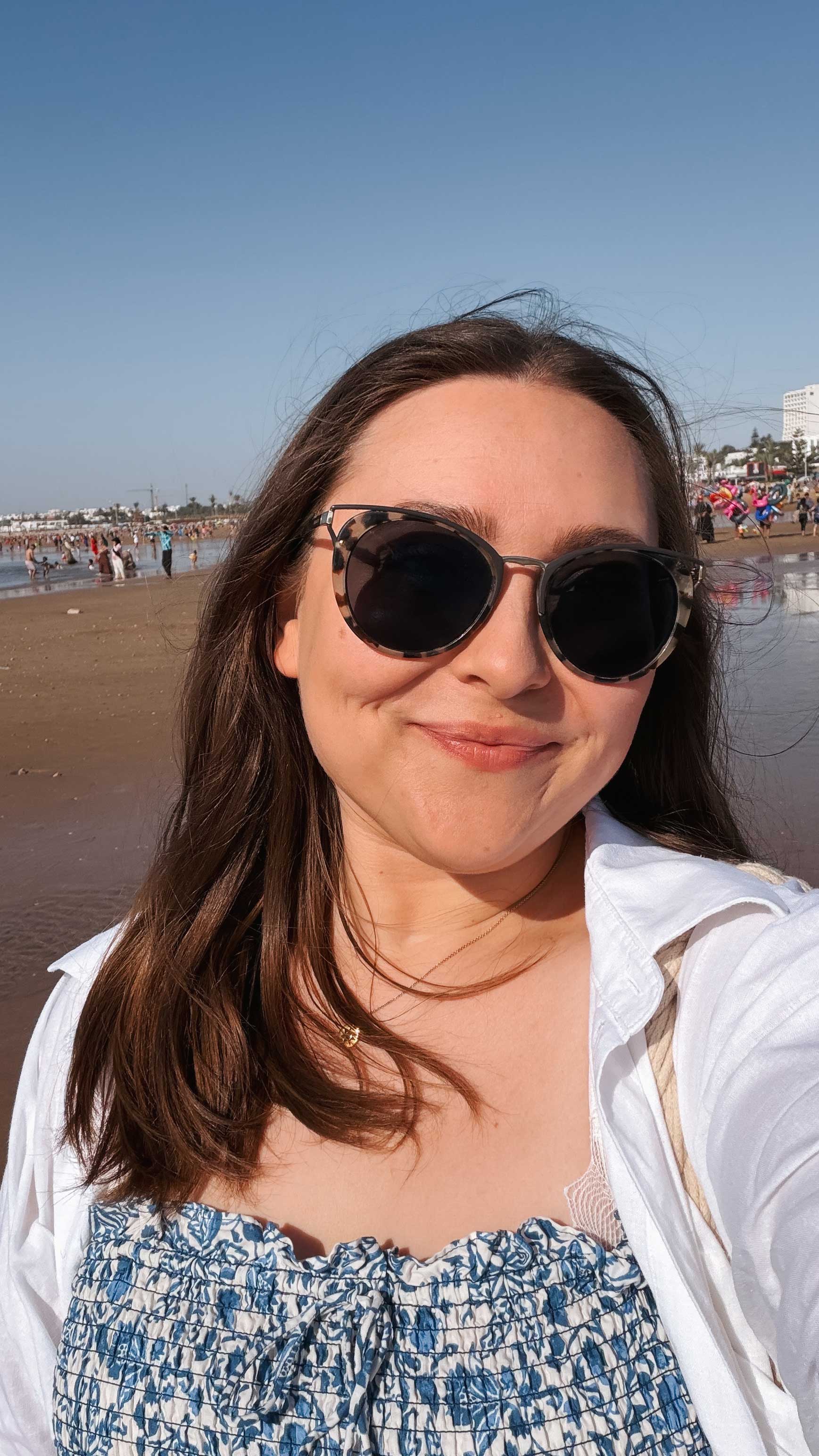
Sandra Potisek is a travel content creator, originally from Slovenia and now spending much of her year in Morocco. As part of the Village Morocco Travel team, she works closely with local guides to plan trips for international guests — and off the clock, she's immersing herself in the country's culture, cuisine, and lesser-known corners firsthand.
Have Any Questions?
We’re here to help with any questions about our tours, travel plans, pricing, or customizing your Morocco journey.