The Odyssey Filming Locations in Morocco: A Local Guide (with Map & How to Visit)
Christopher Nolan turned Morocco into the ancient Greek world. When The Odyssey reached cinemas in July 2026, audiences were looking at the towers of Troy and the wind-whipped beach where the Trojan Horse sits half-buried in the sand. Much of it was filmed across Morocco, from the mud-brick ksar of Aït Benhaddou to the Atlantic ramparts of Essaouira.
We run tours across Morocco and know every one of these places well. Each is worth visiting in its own right, each has a completely different vibe, and each carries centuries of history and culture that go far beyond the film. That’s the part we love showing people. This guide maps every Odyssey filming location in Morocco you can visit, the scene shot at each one, the best light to photograph it, and how to get there.
Quick answer: In Morocco, The Odyssey was filmed mainly at Aït Benhaddou (the city of Troy), Essaouira (the beach with the Trojan Horse), and around Ouarzazate, Marrakech, and Tahannaout in the High Atlas foothills. Aït Benhaddou and Essaouira are the two headline locations to visit.
The Odyssey Morocco filming locations at a glance
Location | Region | The scene filmed here | Can you visit? |
|---|---|---|---|
Aït Benhaddou | Ouarzazate Province | The city of Troy and its destruction | Yes — UNESCO site, open daily |
Essaouira | Atlantic coast | The Trojan Horse on the beach; the raging sea | Yes — walkable old town & beach |
Tahannaout | High Atlas foothills | “Parts of the city” of Troy | Yes — day-trip from Marrakech |
Ouarzazate | Ouarzazate Province | Production hub / Atlas Studios | Yes — “Gateway to the Sahara” |
Marrakech | Marrakech-Safi | Production base; surrounding plains | Yes — major city |
This guide covers only the locations in Morocco you can visit easily. The film’s Calypso / island of Ogygia scenes were shot at Dune Blanche near Dakhla, in Western Sahara, and the production also filmed in Greece, Italy (Sicily), Iceland, Scotland, Malta and Los Angeles.
1. Aït Benhaddou: the city of Troy
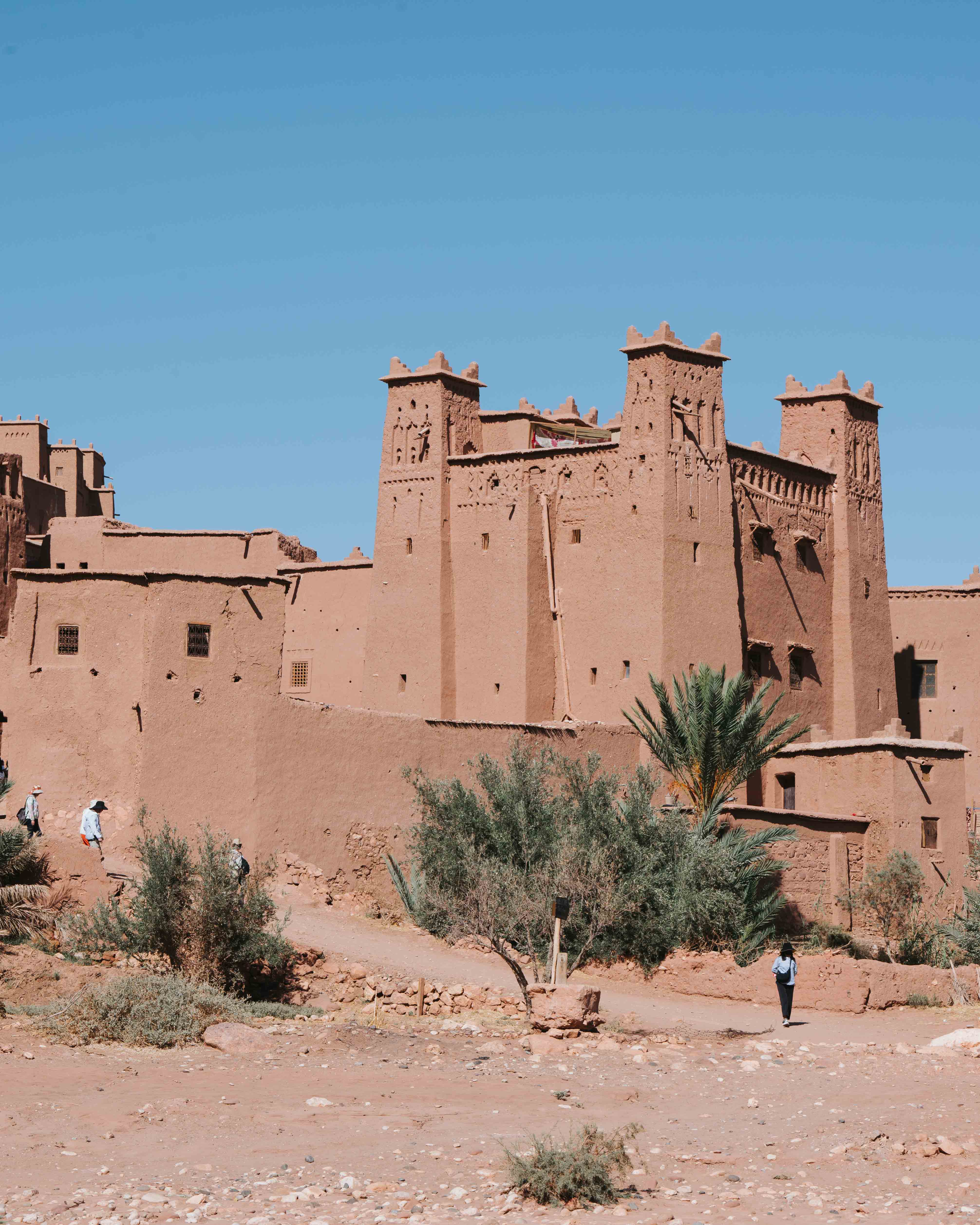
If one image defines The Odyssey, it’s Troy. And Troy is Aït Benhaddou.
This UNESCO-listed ksar sits on the edge of the High Atlas near Ouarzazate, its earthen towers climbing a hillside above the Ounila River. For the film, the production reportedly added around 60 temporary structures (a pillared “Temple of Athena,” extended gates and walls) to build the doomed city, and staged its spectacular destruction here. It’s the burning-city imagery from the trailers.
Aït Benhaddou has played the ancient world before. Gladiator, Lawrence of Arabia, and Game of Thrones were all filmed there. But Nolan’s Troy is its biggest turn yet.
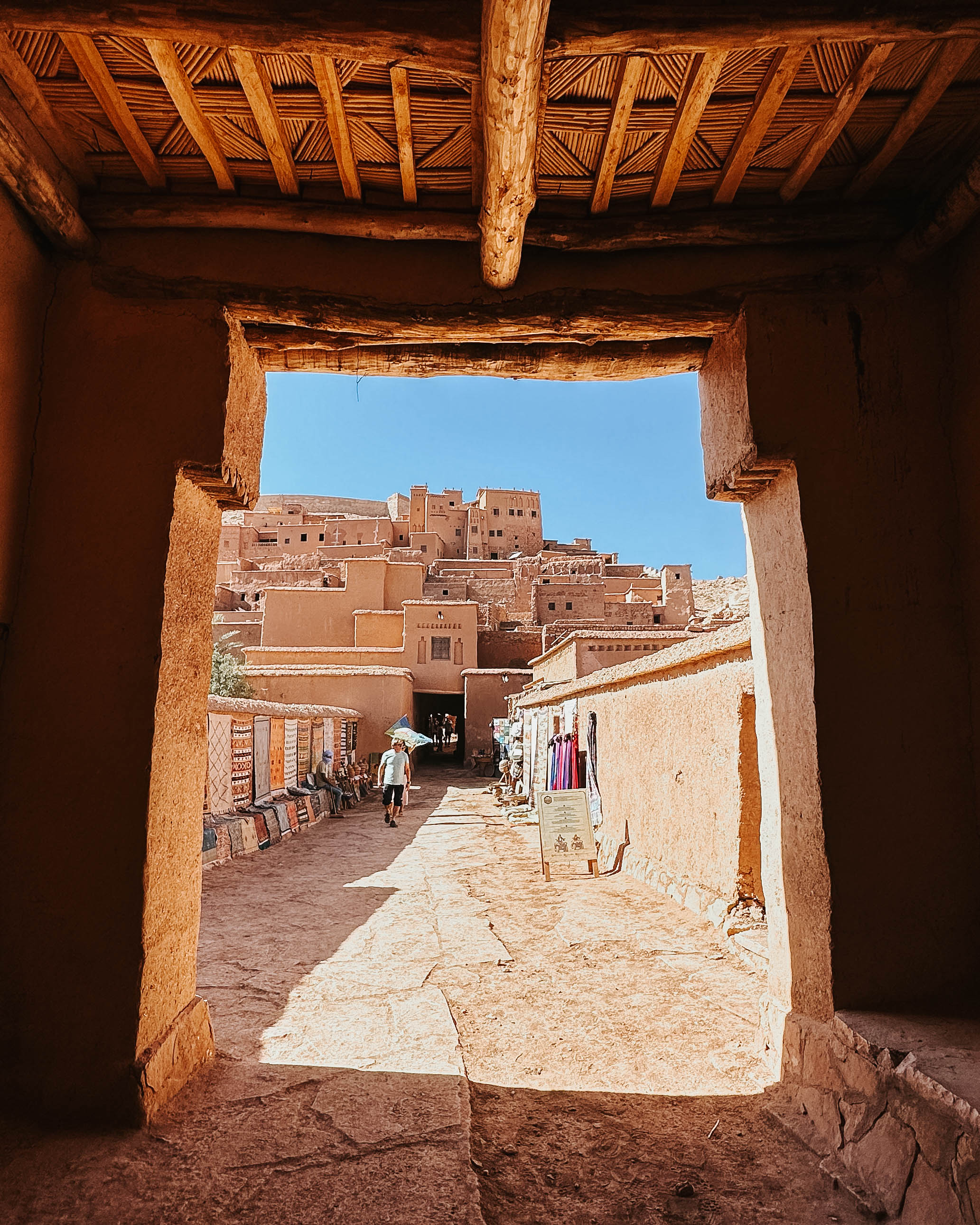
The climb up through the ksar is half the magic: the picturesque lanes and stacked kasbahs feel like stepping into another century, and the view from the top is every bit as good as the journey up. Beyond the film, this is one of the great surviving examples of southern Moroccan earthen architecture, and there’s real history and daily life here we love walking people through.
How to visit:
- Where: ~30 km from Ouarzazate; roughly 3.5–4 hours by road from Marrakech over the Tizi n’Tichka pass.
- On the ground: Cross the river, climb through the lanes to the granary near the top for the panorama that stood in for Troy’s walls.
- Tip: Pair it with the Atlas crossing — the Tizi n’Tichka is a highlight in its own right.
A quick tip for photography enthusiasts: For the best light, shoot Aït Benhaddou at sunrise. The ksar’s main face looks east, so its towers catch the first sun. Come about 30 minutes after sunrise, when the whole hillside turns molten gold, and you’ll have it nearly to yourself before the day-trip coaches arrive from Marrakech. The classic frame is from the far bank of the Ounila River (or a rooftop terrace on the New Town side facing the ksar). When the river is running, you can even catch a reflection. Sunset lights the back of the site and draws crowds. Pretty, but sunrise is the photographer’s window.
2. Essaouira: the beach with the Trojan Horse
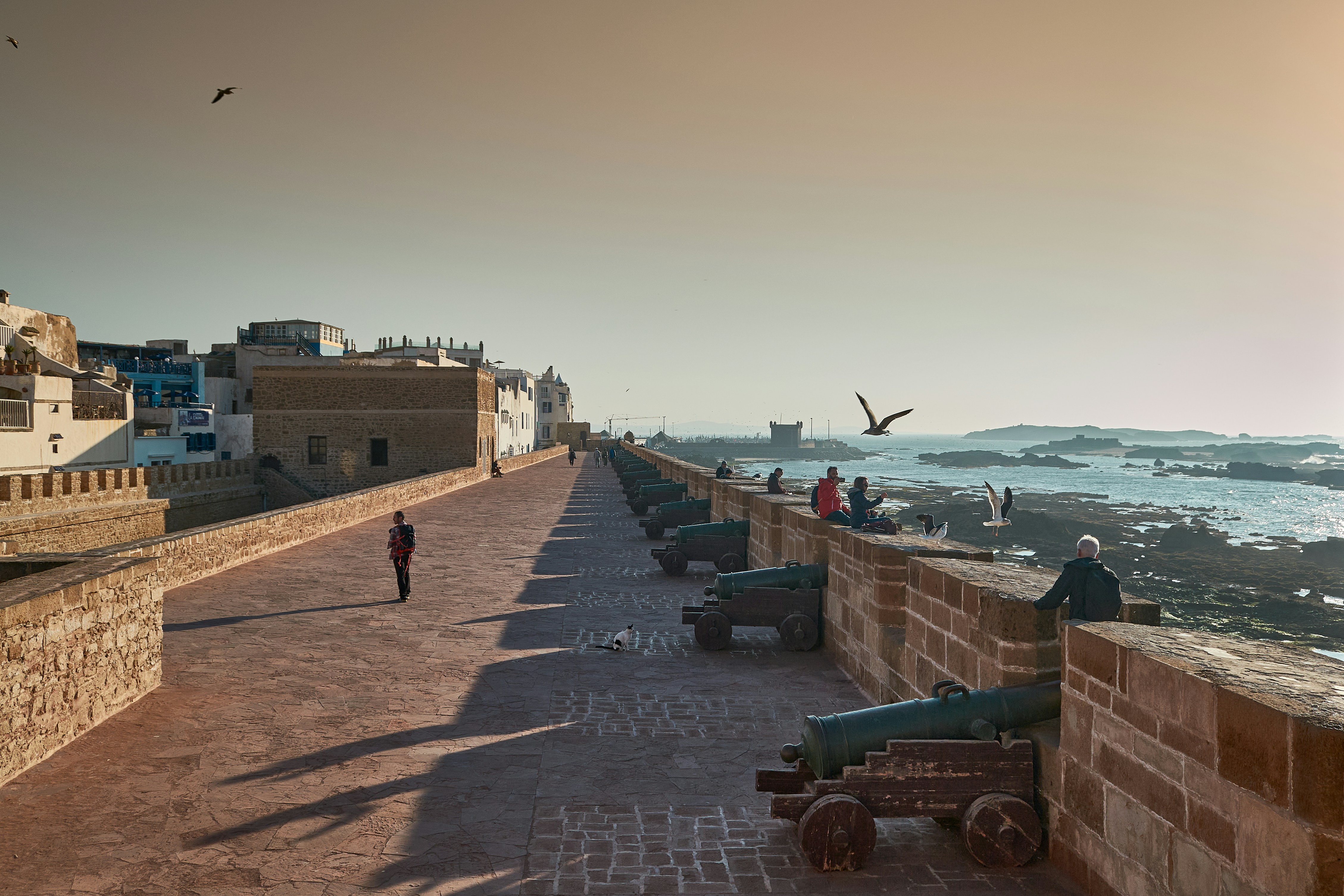
On the Atlantic coast, the fortified port of Essaouira provided the film’s seascape. This is where the Trojan Horse sits on the sand. Around 35 feet of it, reared up and half-buried.Here’s the beach from which the Trojans take the gift as a prize back to the city. Nolan also turned his cameras on the Atlantic itself and let the trade winds play the angry sea.
Essaouira is, in a word, windy. The locals call it “the Windy City,” and that relentless Atlantic breeze is exactly what made it work on screen. Off-screen, it’s one of Morocco’s most relaxed towns: 18th-century sea walls, a working fishing harbour, and a whitewashed medina that’s a joy to wander.
How to visit:
- Where: ~2.5–3 hours west of Marrakech by road; an easy day trip or overnight.
- What to see: Walk the Skala ramparts and cannon-lined bastions, then the long beach south of the medina where the coastal scenes were staged.
- When: Bring a windproof layer whatever the season; spring and autumn have the kindest light.
3. Tahannaout & the Marrakech foothills
Just south of Marrakech, the olive-press town of Tahannaout and the surrounding High Atlas foothills (with the stark Agafay plains nearby) doubled for “parts of the city” of Troy. It’s an easy, scenic day-trip from Marrakech and a lovely contrast to the big sites. Quiet, rural, and framed by mountains.
4. Ouarzazate & Marrakech: your gateways
Ouarzazate, nicknamed “Ouallywood,” is Morocco’s film capital and the logistical base for desert epics; it’s your gateway to Aït Benhaddou and home to the Atlas Studios backlots. Marrakech is the natural start and end point for any Odyssey-in-Morocco trip — the region’s transport hub, with the main international airport and no shortage of its own history and colour.
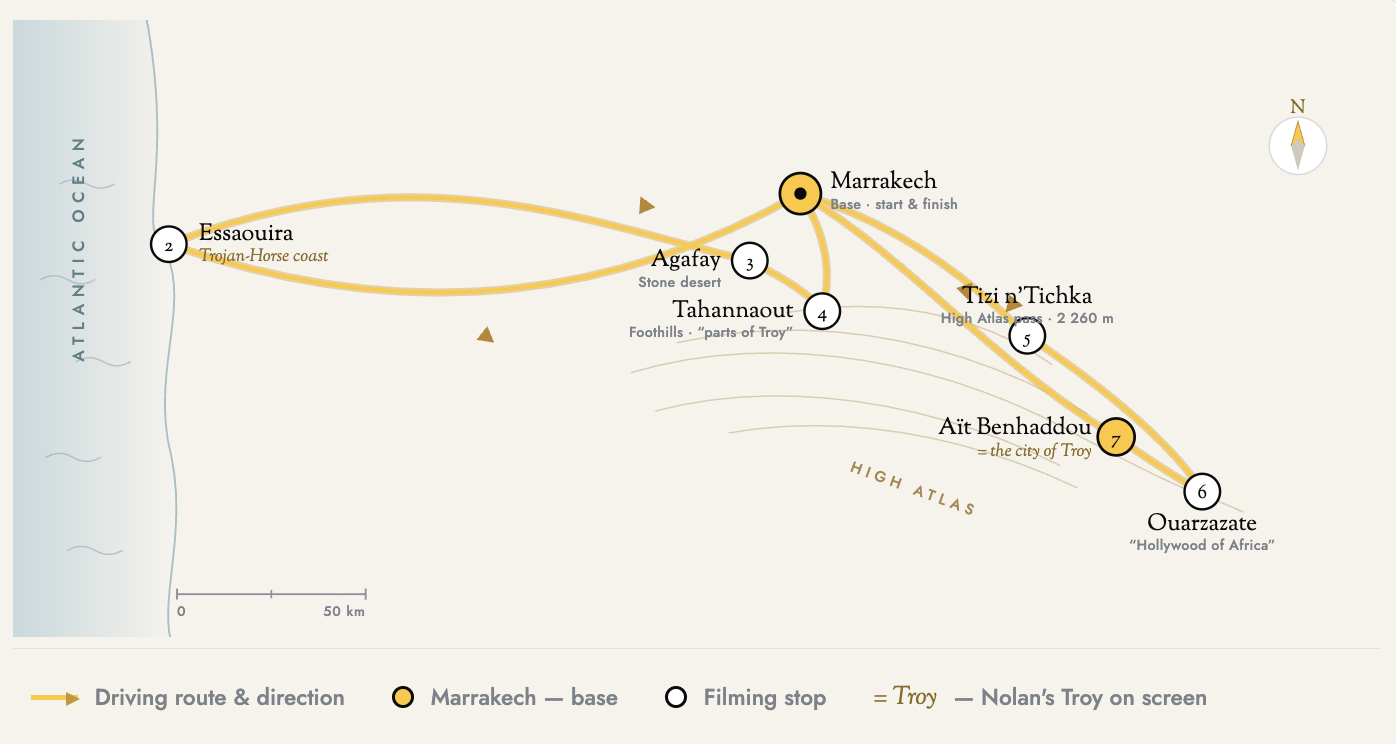
Map: The Odyssey filming locations in Morocco
Plotted west to east, the visitable locations form a natural loop:
Essaouira (Atlantic coast) → Marrakech (hub) → Tahannaout / Agafay (foothills) → over the Tizi n’Tichka pass → Ouarzazate → Aït Benhaddou (Troy).
That’s a 3–5 day circuit by road and the route our tour follows below.
See it for yourself: our Odyssey Morocco film tour
We built a private 4-day Odyssey filming locations tour around the real Moroccan sites above. The actual places Nolan filmed, not a backlot.
The route: Marrakech → Essaouira (the Trojan Horse coast) → back over the High Atlas via Tahannaout → Ouarzazate → Aït Benhaddou (Troy) → return to Marrakech.
The Trojan-Horse coast
Drive west through the argan groves to the Atlantic port of Essaouira (≈ 3 hrs). Here the giant Trojan Horse sat half-buried on the sand, and Nolan turned his cameras on the ocean to play the raging sea. Walk the 18th-century Skala ramparts and cannon-lined bastions, then the long beach south of the medina where the coastal scenes were staged. That famous Atlantic wind is exactly what made it work on screen.
From the coast to the foothills
After a relaxed coastal morning, drive back east toward the mountains. Explore the Agafay stone desert and the olive-press town of Tahannaout in the High Atlas foothills — rugged country that doubled for “parts of the city” of Troy, a striking contrast to the ocean. Continue into Marrakech, the production's base city, for the evening.
Over the Atlas to Troy
A spectacular driving day across the High Atlas on the Tizi n'Tichka pass, with panoramic stops and Berber villages (optional detour to the Glaoui Kasbah at Telouet). Reach Ouarzazate, the “Hollywood of Africa,” for the Atlas Film Studios and Taourirt Kasbah. In the late afternoon, arrive at Aït Benhaddou — the UNESCO ksar Nolan transformed into Troy, adding a pillared Temple of Athena and city gates before staging its destruction.
Molten-gold sunrise, then home
At the ksar for sunrise: its towers face east, so about 30 minutes after the sun clears the ridge the whole hillside glows molten gold — and you'll have it nearly to yourself before the day-trip coaches arrive. Shoot from the far bank of the Ounila River, then explore at your own pace. After breakfast we recross the Atlas and return to Marrakech, arriving by evening.
What makes it different:
- You’ll experience each place with a local guide who knows the sites and the history and culture behind both.
- We show you the other remarkable places along the route — not just the film spots, but the kasbahs, viewpoints and villages most travellers drive straight past.
- We time visits for the best light and the fewest crowds (that sunrise at Aït Benhaddou is on us).
- And we make the journey stress-free from start to finish. Transport, hand-picked riads and kasbah stays, and the logistics all handled.
- Since this is a private tour, it can be totally customized. You can choose where to start and finish, and extend it with a trip to the Sahara or anywhere else in Morocco.
Book the Odyssey Morocco Tour
Frequently asked questions
Where was The Odyssey filmed in Morocco?
Mainly at Aït Benhaddou (which became the city of Troy) and Essaouira (the beach holding the Trojan Horse), with further filming around Tahannaout, and production based around Ouarzazate and Marrakech.
What scenes were filmed in Morocco?
The city of Troy and its destruction were built and shot at Aït Benhaddou. Essaouira’s beach held the giant Trojan Horse and stood in for the stormy sea, and Tahannaout doubled for parts of the city.
Which Morocco filming location is the most famous?
Aït Benhaddou, the UNESCO-listed ksar that plays Troy. It’s the most recognisable and most visited, roughly four hours from Marrakech.
What countries was The Odyssey filmed in?
Besides Morocco, the production filmed in Greece, Italy (Sicily), Iceland, Scotland, Malta and the United States. The Calypso/Ogygia scenes were shot at Dune Blanche near Dakhla in Western Sahara.
Can you visit The Odyssey filming locations in Morocco?
Yes. Aït Benhaddou, Essaouira, Ouarzazate and Tahannaout are all open to visitors and easily combined on a road trip from Marrakech, or on a guided Odyssey filming-locations tour like ours.
How far is Aït Benhaddou from Marrakech?
About 180 km, roughly 3.5–4 hours by road over the Tizi n’Tichka pass, one of Morocco’s most scenic drives.
Ready to stand where Troy burned and the Trojan Horse washed up?
Published: 15 August 2026
About the Author
Sandra Potisek is a travel content creator, originally from Slovenia and now spending much of her year in Morocco. As part of the Village Morocco Travel team, she works closely with local guides to plan trips for international guests — and off the clock, she's immersing herself in the country's culture, cuisine, and lesser-known corners firsthand.
Have Any Questions?
We’re here to help with any questions about our tours, travel plans, pricing, or customizing your Morocco journey.