Spain and Morocco Itinerary: How to Add Morocco to Your Spain Trip
Many of the American travelers we work with add Morocco to a bigger trip to Europe. Spain is the most common starting point: people plan a trip there, look at the map, and realize Morocco is right there. At its narrowest point, the Strait of Gibraltar is only about 14 km (9 miles) wide, and most Spanish cities are a short, inexpensive flight from Marrakech, Casablanca, Fes or Tangier.
We’re a Morocco-based tour operator, so we plan a lot of trips for travelers adding Morocco to a week or two in Spain. This guide covers what we tell them: whether it’s worth it, how many days to give Morocco, how to get there, and sample itineraries that actually work.
Can you do Spain and Morocco in one trip?
Yes, and it’s easier than most people expect. Morocco is a 1 to 2 hour flight from most major Spanish cities, or about a one-hour ferry ride from southern Spain. You don’t need a separate long-haul flight, and US passport holders don’t need a visa for Morocco.
Give Morocco at least 4 to 5 days, ideally a week. You can put it at the beginning, end or in the middle of your trip, and fly home from Spain, where flights to the US can be cheaper and more frequent.
Is it worth visiting Morocco from Spain?
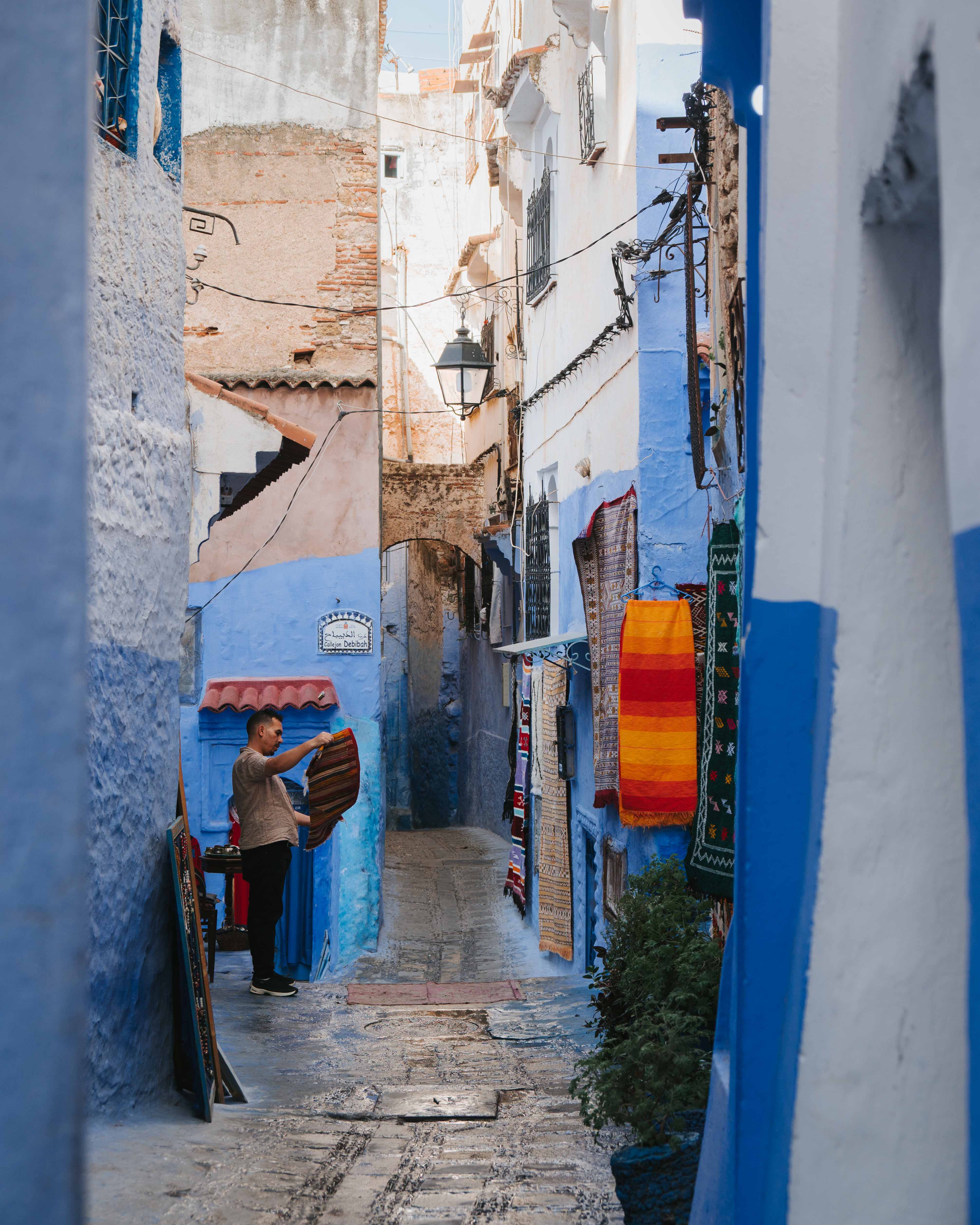
If you have the time, absolutely. Morocco feels like a different world from Andalusia, even though it’s so close: the medinas, the souks, the Atlas Mountains and the Sahara are nothing like anything you’ll see in Spain. For many of our guests, it ends up being the part of the trip they talk about most.
What’s not worth it, in our experience, is squeezing Morocco into a single day. A day trip from Spain gets you a few hours in Tangier, much of it spent on the ferry and in a large group. It’s fine if you only have one day to spare, but it won’t give you a real sense of the country. With three or four days, you can see Marrakech and get out into the mountains or the desert.
How many days to add for Morocco
It depends on what you want to see, but here’s how we usually break it down:
- 1 day: a day trip to Tangier from southern Spain. A taste of northern Morocco, but that’s about it.
- 3 to 4 days: Marrakech plus a trip into the Atlas Mountains, or Marrakech plus a short desert tour. This is the minimum we’d recommend.
- 5 to 7 days: Marrakech, the Sahara and Fes. This is the classic route, and it’s where Morocco really starts to make sense.
- 10 days or more: the full loop, including the north (Tangier and Chefchaouen), Fes, the Sahara and Marrakech.
The most common mistake we see is spending five days in Marrakech alone. Three nights in the city is usually plenty; use the rest of your time to get out of it.
Here’s our detailed breakdown of how many days you realistically need to see Morocco.
How to get from Spain to Morocco
By plane
Flying is the easiest option for most itineraries. Budget airlines like Ryanair, Vueling and easyJet, along with Royal Air Maroc, cover the main routes, and booked in advance, one-way fares can start from around $35 / €30 / £25.
From | To Marrakech (direct flight, approx.) |
Madrid | 1 hr 45 min |
Barcelona | 2 hr 15 min |
Seville | 1 hr 15 min |
Málaga | 1 hr 15 min |
Valencia | 2 hr 5 min |
Casablanca, Morocco’s main international airport, has direct Royal Air Maroc flights from Madrid, Barcelona, Málaga, Seville and Valencia, and it’s about 2.5 to 3 hours from Marrakech by train. Fes has direct Ryanair flights to and from Madrid, Málaga and Valencia, which makes it a useful city to fly out of at the end of your Morocco leg. Routes and schedules change often, so check current flights before you plan around one.
Budget airlines have strict baggage limits, so check what’s included before you book, especially if you’re carrying luggage for a two-week trip.
By ferry
If you’re already in southern Spain, the ferry is a memorable way to cross. The fastest and most practical route is Tarifa to Tangier: about an hour, arriving at the port right next to Tangier’s city center. It’s run by Baleària, and one-way tickets for a foot passenger start from around $80 / €70 / £60. Return tickets cost only slightly more, so if you’re coming back the same way, compare both (current schedules and prices).
Ferries also run from Algeciras to Tangier Med, but that port is about 45 km (28 miles) outside Tangier, so it’s more convenient if you’re traveling by car or heading straight on somewhere else.
From Tangier, the high-speed train reaches Casablanca in a little over 2 hours, and Marrakech in roughly 5 to 6 hours in total. Fes is about 4 hours away, and Chefchaouen around 2 to 2.5 hours by road.
Which Moroccan city to arrive in
- Marrakech: the best-connected airport from Spain and the natural starting point for the Atlas Mountains and the Sahara.
- Casablanca: Morocco’s main international hub, with good rail connections to Marrakech, Rabat and Fes.
- Fes: a good place to start or end if you’re doing the classic Marrakech–Sahara–Fes route.
- Tangier: best if you’re coming by ferry and want to see the north, including Chefchaouen.
Our favorite trick is to fly open-jaw: arrive in one Moroccan city and leave from another. For example, fly from Málaga to Marrakech, take a 3-day desert tour from Marrakech to Fes, and fly from Fes back to Madrid or Málaga. You’ll see the Sahara and save a full day of backtracking.
Sample itineraries
These are the routes we recommend most often. Adjust them to your pace, but keep the order: it’s designed to avoid backtracking and expensive one-way flights home.
7-day southern Spain and Morocco itinerary
- Days 1–2: Seville: the Alcázar, the cathedral and the Santa Cruz quarter
- Day 3: Fly from Seville to Marrakech (about 1 hr 15 min). Evening in the medina.
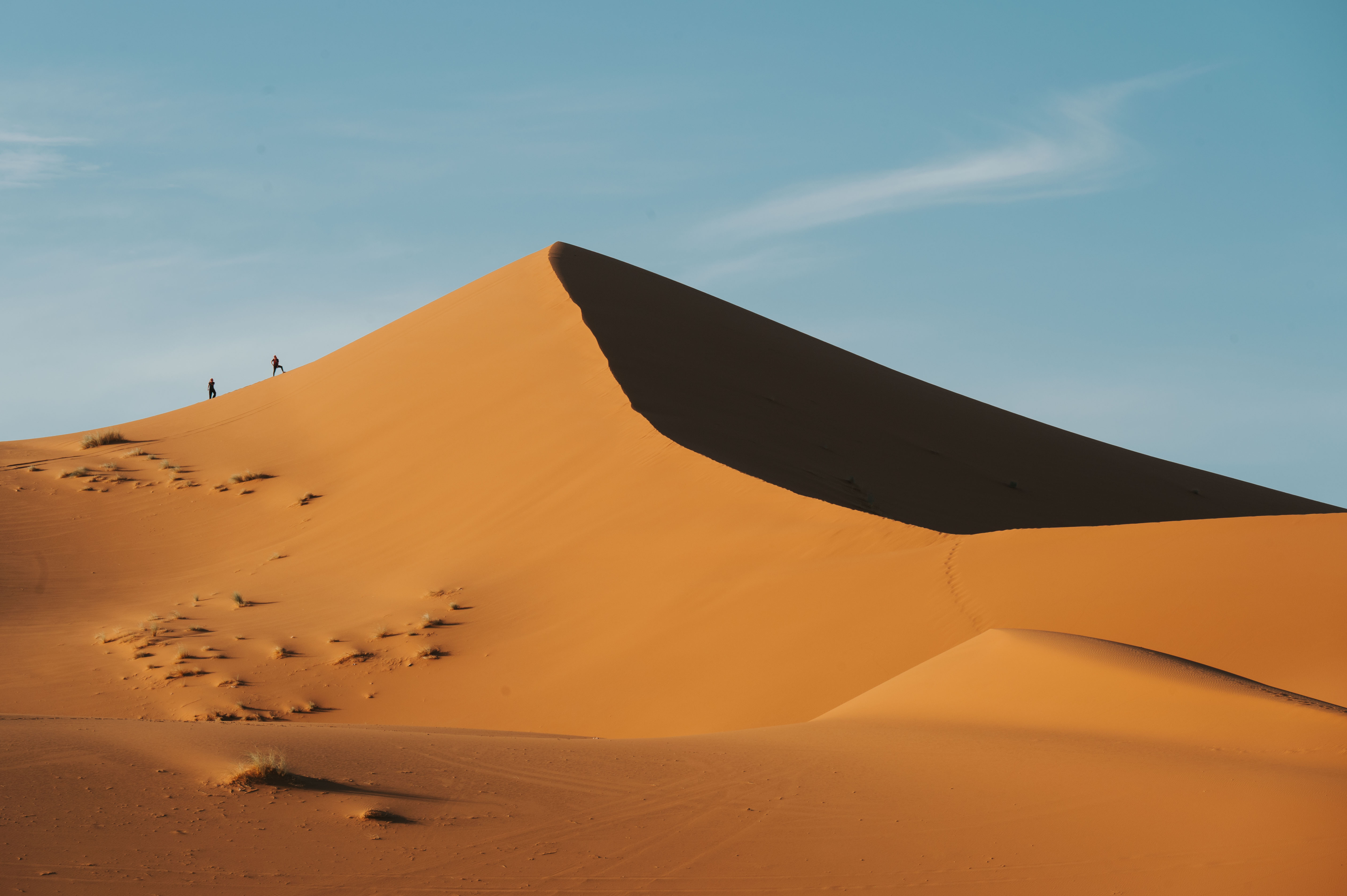
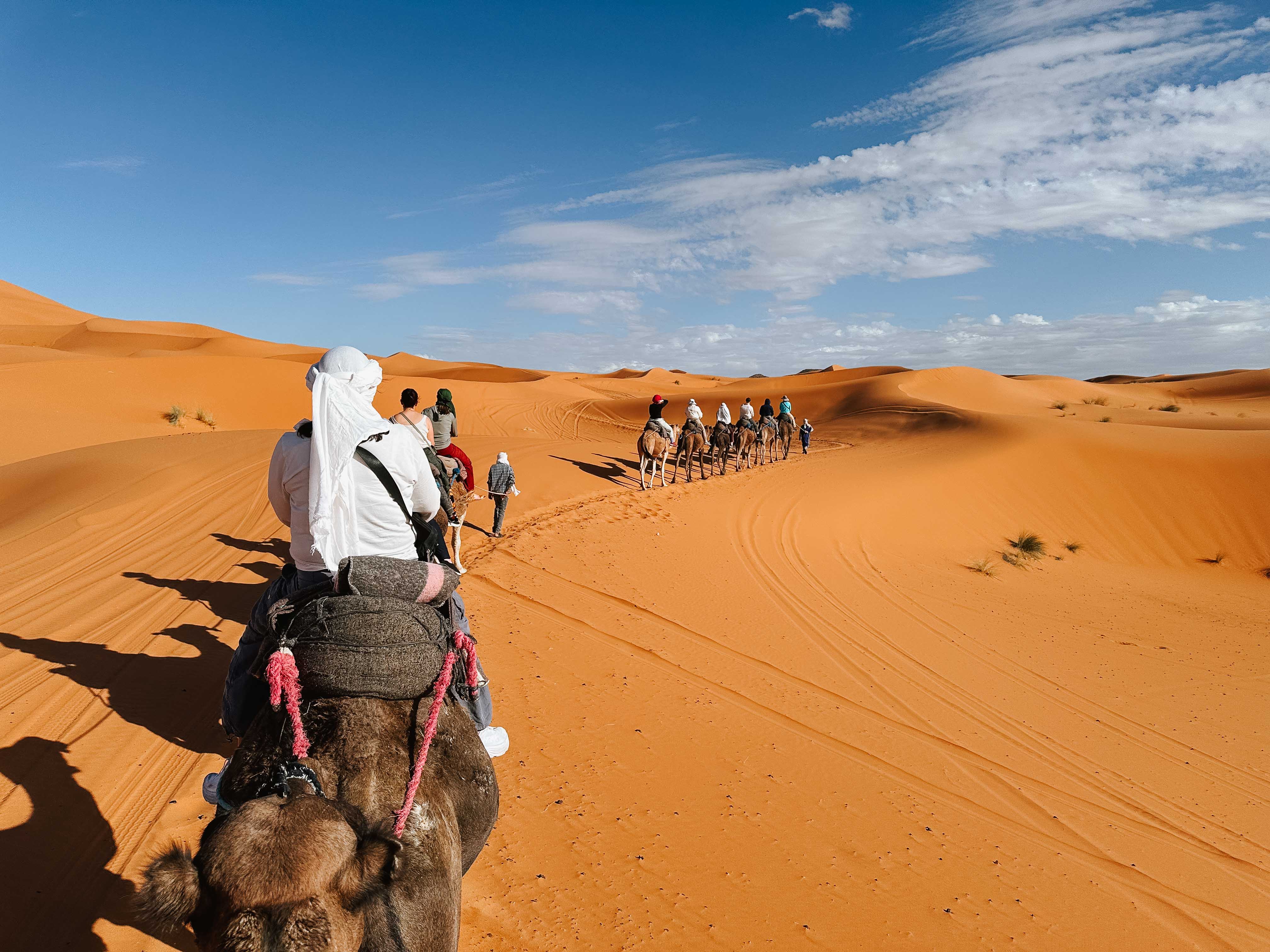
- Days 4–6: A 3-day desert tour from Marrakech to Merzouga: over the Atlas Mountains, through Aït Ben Haddou and the Dades Valley, a night in a desert camp in the Sahara, and back to Marrakech
- Day 7: A last morning in the souks, then fly from Marrakech to Madrid or Seville and connect to your flight home
It’s a full week, but it gives you the highlights of both countries, including a night in the Sahara, which we strongly recommend. If you can add a day, spend it in Marrakech, or swap the 3-day trip for our 4-day desert tour from Marrakech for a more relaxed pace in the desert.
If you’d rather keep the driving to a minimum, the alternative is to stay based in Marrakech for days 4 to 6, with a day trip to the Atlas Mountains and a day in Essaouira on the coast.
10-day southern Spain and Morocco itinerary
- Day 1: Arrive in Seville
- Day 2: Seville: the Alcázar, the cathedral and the Santa Cruz quarter
- Day 3: Travel to Granada and visit the Alhambra (book tickets well in advance)
- Day 4: Travel to Málaga and fly to Marrakech. Evening in the medina.
- Days 5–6: Marrakech, with the option of a day trip to the Atlas Mountains
- Days 7–9: A 3-day desert tour from Marrakech to Fes, crossing the Atlas Mountains to spend a night in the Sahara and arriving in Fes on day 9
- Day 10: Fly from Fes to Madrid or Málaga and connect to your flight home
That gives you three nights in Marrakech and a night in the desert. If you’d rather stay longer in Spain, add a day trip to Córdoba from Seville and shorten Marrakech to two nights.
2-week Spain and Morocco itinerary
- Days 1–3: Madrid, with a day trip to Toledo
- Days 4–5: Seville, reached in about 2.5 hours on the high-speed train from Madrid
- Days 6–7: Granada and the Alhambra
- Day 8: Travel to Málaga and fly to Marrakech
- Days 9–10: Marrakech
- Days 11–13: The same 3-day desert tour from Marrakech to Fes, arriving in Fes on day 13
- Day 14: Fly from Fes to Madrid and connect to your flight home
If you’re starting in Barcelona instead, spend your first days there and fly from Barcelona to Marrakech, then continue the same way.
Starting in the north: the ferry route
If you have a week or more for Morocco and you’re already in southern Spain, the ferry lets you see a side of the country most visitors miss. Take the ferry from Tarifa to Tangier, continue to Chefchaouen and Fes, cross the Atlas Mountains to the Sahara, and finish in Marrakech, where you can fly back to Spain. Our 7-day desert tour from Tangier to Marrakech follows exactly this route.
Best time to visit Spain and Morocco
Spring (March to May) and autumn (September to November) are the best times to combine both countries. The weather is pleasant in the cities, the Sahara is comfortable during the day, and the evenings are warm enough to enjoy the rooftops in Seville and Marrakech.
Summer is very hot in Seville, Córdoba, Marrakech and the desert, with temperatures often above 40°C (104°F). Winter is mild on the Spanish coast, but nights in the Sahara are cold, and there’s often snow in the High Atlas. Our guide to the best time to visit Morocco goes into more detail, month by month.
Practical things to know before crossing to Morocco
- Passports and visas. US citizens don’t need a visa for stays of up to 90 days (more in our guide to the Morocco visa for US citizens). Morocco isn’t part of the Schengen area, so the days you spend there don’t count toward your 90 days in Spain. You can check your dates with the EU’s short-stay calculator.
- Currency. You’ll switch from euros to Moroccan dirhams. The dirham is a closed currency, so you’ll withdraw it from an ATM once you arrive. Our guide to whether Morocco is expensive covers budgets, cash and cards.
- Time zone. Morocco stays on GMT (UTC+0) all year, so it’s 1 hour behind Spain in winter and 2 hours behind in summer. Double-check your flight times.
- What to wear. Morocco has a more modest dress culture than Spain. See our guide to what to wear in Morocco.
- Tipping. Tipping works differently in Morocco, and small change in dirhams goes a long way. See our guide to tipping in Morocco.
Adding Morocco to your Spain trip with us
Adding Morocco to a Spain itinerary is one of the things we do often. Many of our American guests attach Morocco to a longer trip through Europe, whether that starts in Spain, Italy or elsewhere, and we build the Moroccan leg around the rest of their plans. Our main hubs are Marrakech and Casablanca, and we also start and finish private tours in Fes and Tangier, so we can pick you up wherever your Spanish leg ends: off the ferry in Tangier or at the airport in Marrakech, Casablanca or Fes. We can also drop you off for your flight back to Spain.
If you’d like help planning the Moroccan part of your trip, get in touch and tell us your dates. That’s exactly what we do.
You can also browse our private tours by starting point below. Or, if none of the existing itineraries quite fits, we can create a fully custom tour based on your dates, travel style and budget.
Tours from Marrakech
Discover Morocco’s most iconic landscapes, from Sahara dunes and kasbahs to mountain valleys and coastal towns.
Tours from Casablanca
Start in Morocco’s modern gateway and journey through imperial cities, scenic landscapes, and unforgettable desert horizons.
Tours from Fes
Travel from the cultural heart of Morocco to ancient ruins, blue villages, cedar forests, and the golden dunes of the Sahara.
Tours from Tangier
Begin in Tangier and explore Morocco from the Mediterranean coast to Chefchaouen, imperial cities, and the Sahara Desert.
Frequently asked questions
Morocco is one of the most visited countries in Africa and is generally considered safe for tourists, including Americans. As anywhere, use common sense in busy places like medinas and markets. Before you travel, check the current US State Department travel advisories.
In the middle, if you can. Flights home to the US are usually cheaper and more frequent from Madrid or Barcelona than from Moroccan airports, so finishing your trip in Spain tends to save money and stress.
Usually not. Most Spanish rental companies don't allow their cars to be taken to Morocco, and their insurance won't cover you there. It's much easier to cross as a foot passenger or by plane and arrange transport in Morocco.
Tarifa, on the southern tip of Spain, is the closest, only about 14 km (9 miles) from the Moroccan coast. It's also where the fastest ferries to Tangier leave from.
Before you book
Morocco is close enough to fit into almost any Spain trip, and different enough that it will probably become the highlight. Give it at least four or five days, fly open-jaw where you can, and finish your trip in Spain for an easier flight home.
If you’d like help planning the Moroccan part of your trip, get in touch and tell us your dates. That’s exactly what we do.
See you in Morocco.
Published: 2 October 2026
About the Author
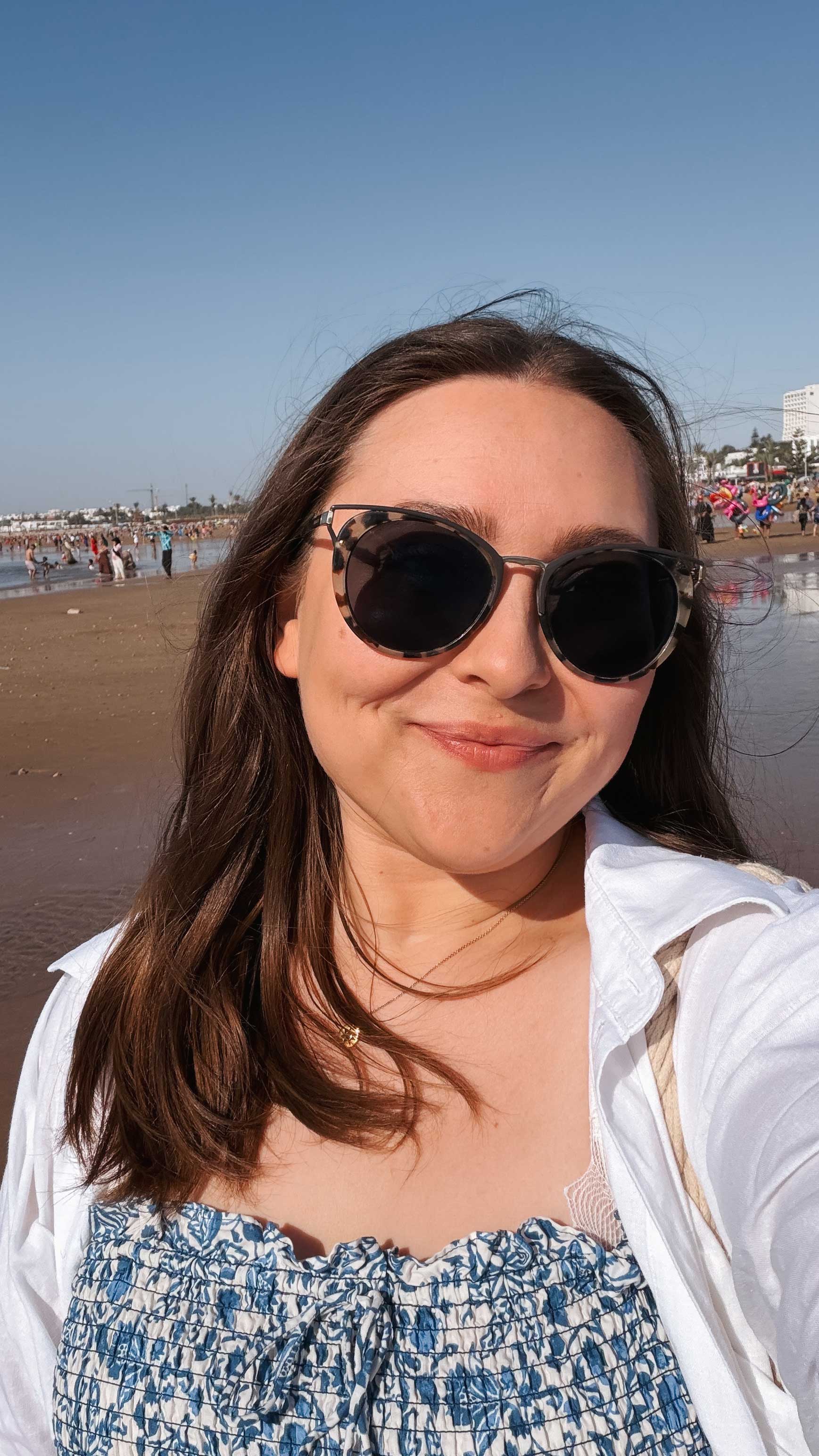
Sandra Potisek is a travel content creator, originally from Slovenia and now spending much of her year in Morocco. As part of the Village Morocco Travel team, she works closely with local guides to plan trips for international guests — and off the clock, she's immersing herself in the country's culture, cuisine, and lesser-known corners firsthand.
Have Any Questions?
We’re here to help with any questions about our tours, travel plans, pricing, or customizing your Morocco journey.